Thank you! Your submission has been received!
Oops! Something went wrong while submitting the form.

For years, gradar has been one of the best-kept secrets in HR technology. We have been heads-down building software rather than shouting about it – so it is fair to say gradar has flown a little under the radar. This article puts that right.
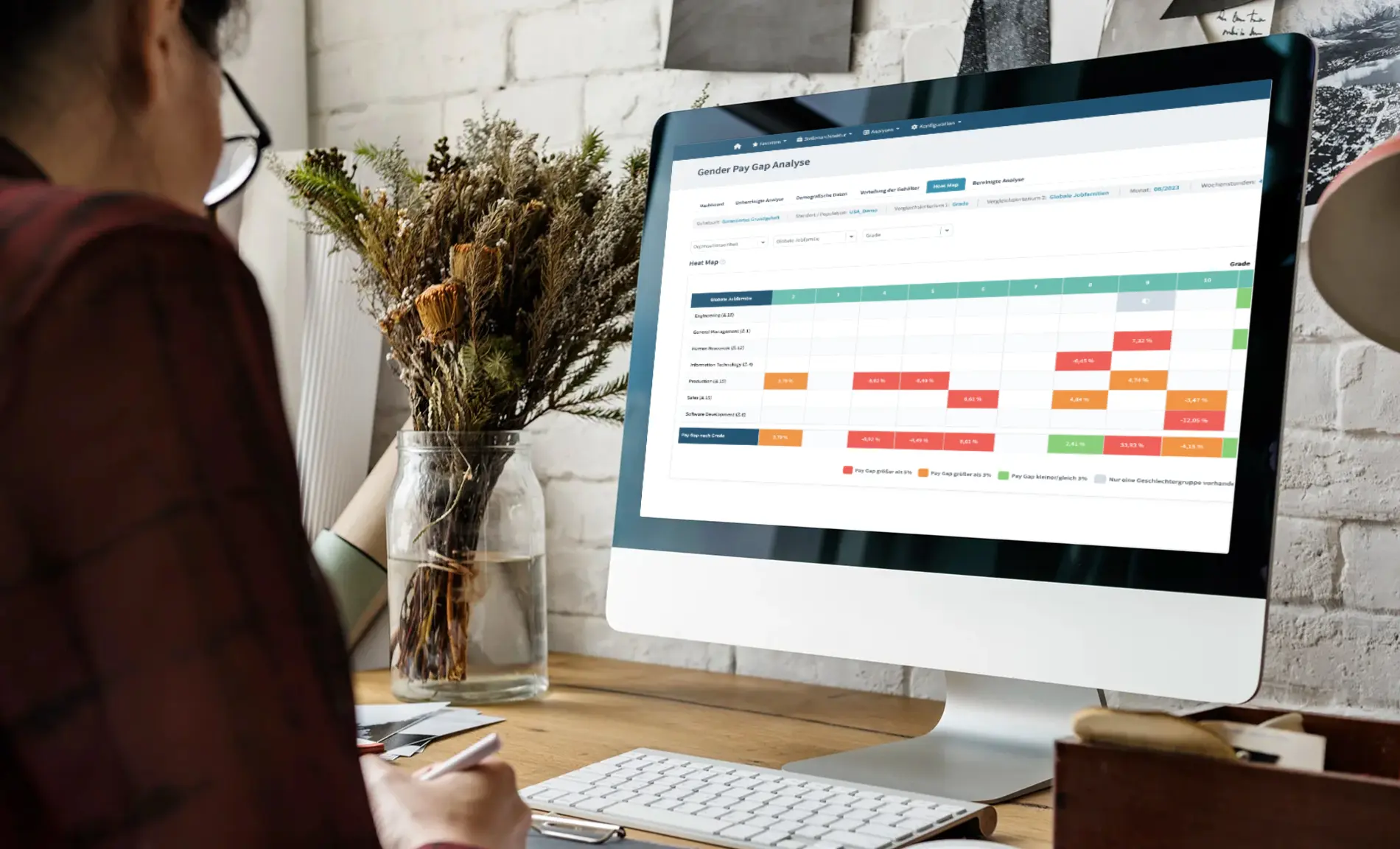
For years, gradar has been one of the best-kept secrets in HR technology. We have been heads-down building software rather than shouting about it – so it is fair to say gradar has flown a little under the radar. 😉 This article puts that right. Using our own (anonymised in aggregate) client data, here is an honest, numbers-first look at who actually relies on gradar for job evaluation, compensation benchmarking and pay transparency.
The short version: gradar is no niche tool. It is the analytical job-evaluation, benchmarking and pay-transparency platform behind more than 600 organisations across over 40 countries and 19 industries – from family-owned manufacturers to global enterprises with tens of thousands of employees.
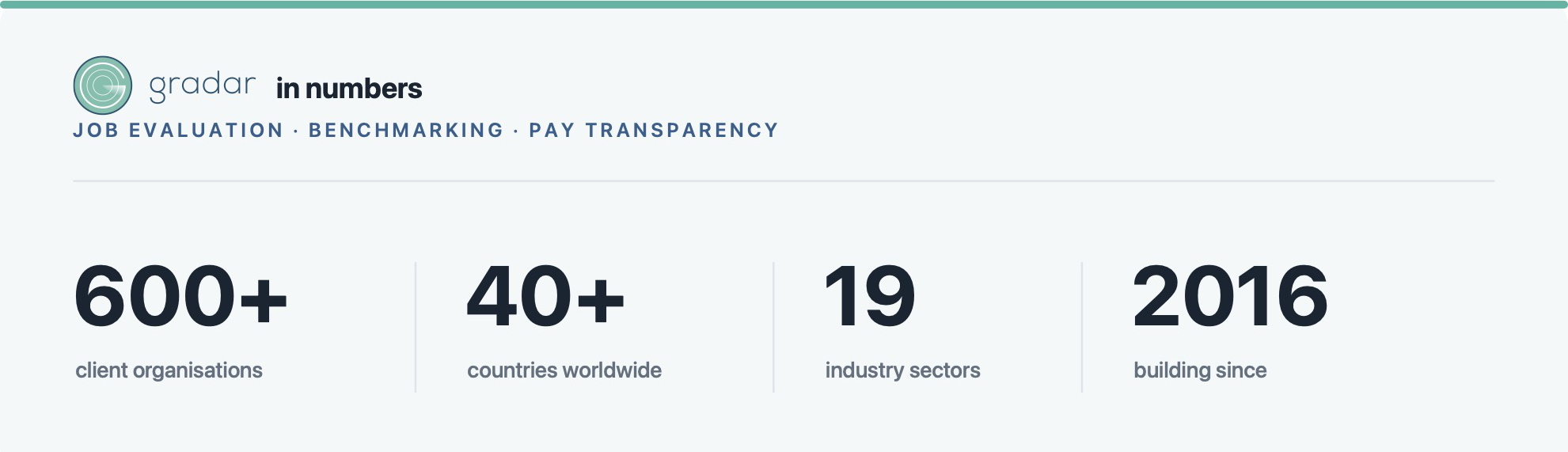
gradar's first clients came on board in 2016. For the first five years, while building an MVP as a fully bootstrapped organisation, growth was deliberate and steady – the work of building a methodology and a product that hold up under scrutiny. Then, from 2021 onward, adoption accelerated sharply: more than 50 new clients that year, climbing through every subsequent year to a record in 2025, with 2026 already pacing ahead of it.
The result is a client base that is both deep and recent. Roughly 60% of all gradar clients signed up within the last two and a half years. That tells you two things: the platform has matured into something organisations choose at scale, and the demand curve is pointing firmly upward – propelled in no small part by Europe's pay-transparency agenda.
If there is one defining feature of gradar's client base, it is range.
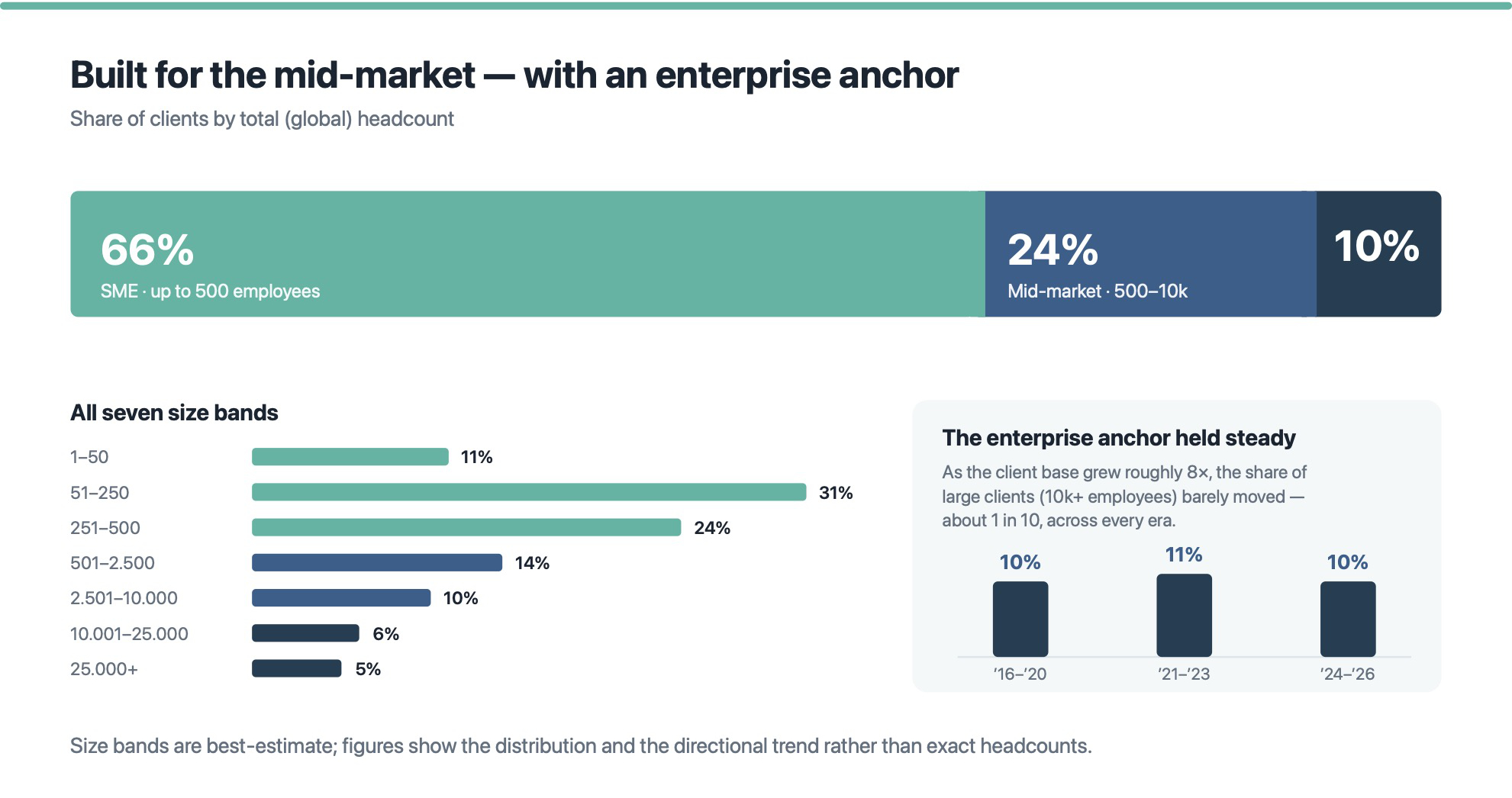
The core of the book is the mid-market and the SME segment. Around two-thirds of gradar clients have up to 500 employees – exactly the kind of organisation that needs rigorous, defensible job evaluation but has historically been priced out of, or over-engineered by, the legacy consultancies. gradar was built to serve them with enterprise-grade method and accessible software.
But the headline that surprises people is the enterprise anchor. As gradar scaled its mid-market footprint eightfold, the share of large clients – organisations above 10,000 employees – has held steady at roughly one in ten, throughout. In other words, growing accessible did not mean growing down: gradar holds large, complex, multi-entity organisations and the smaller specialists side by side.
Most of our client relationships are confidential, so rather than drop logos, the spread of organisations that rely on gradar tells the story on its own:
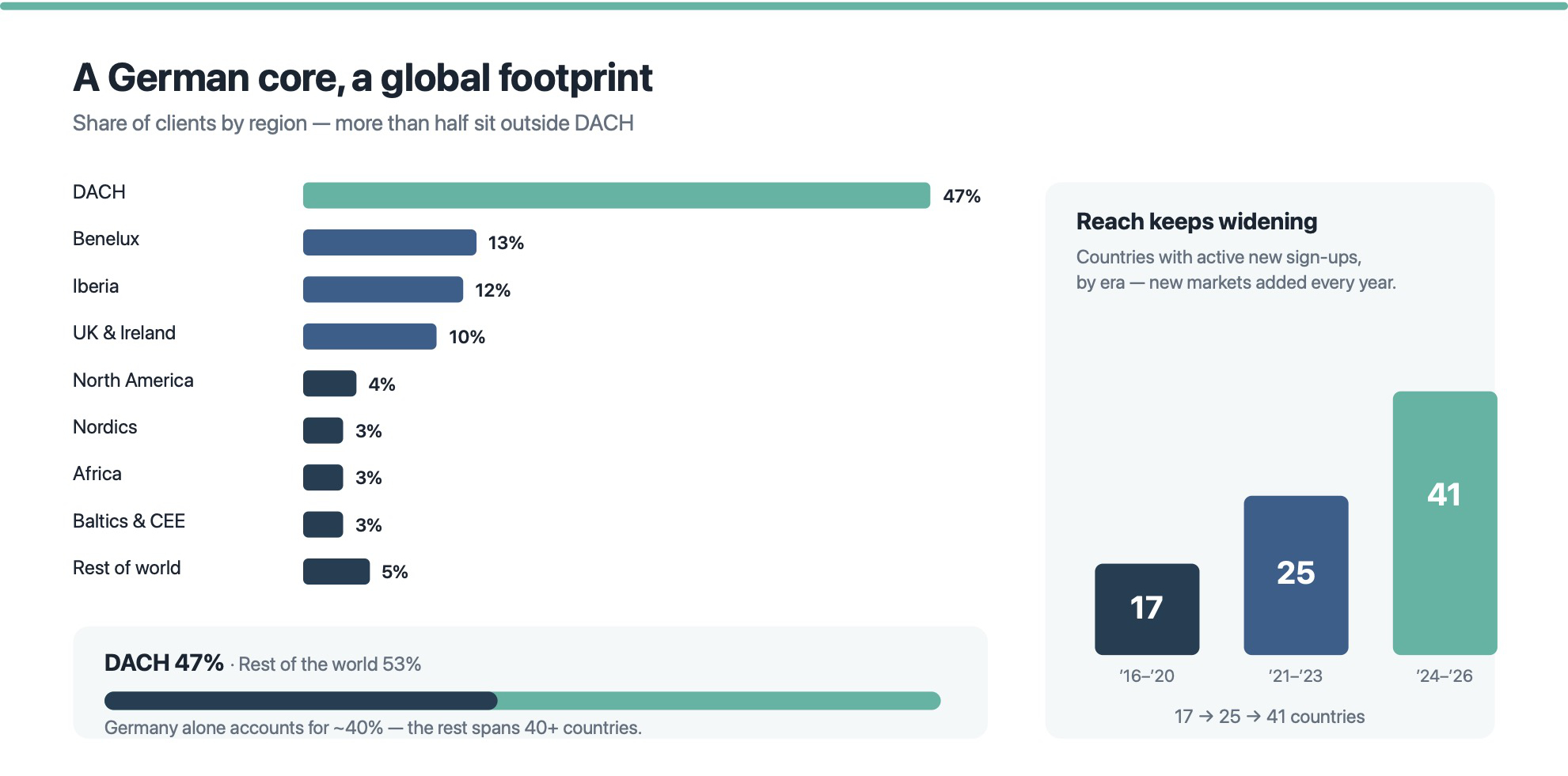
gradar's home market is the German-speaking region, and DACH remains the largest single block. But more than half of gradar's clients sit outside it. The platform is in active use across Benelux, the Iberian peninsula, the UK and Ireland, the Nordics and Central and Eastern Europe, with a growing presence in North America, across Africa, in Türkiye and the Gulf, and in the Caribbean.
That breadth is widening, not narrowing. Across gradar's history, the number of countries with active new sign-ups has more than doubled – from 17 in the early years to over 40 in the most recent period, adding entirely new markets every single year. Pay equity and transparency are not a German concern or a European concern; they are a global one, and gradar's client map reflects that.
Interestingly, each region carries its own signature. DACH leans toward software, manufacturing and retail; the Iberian client base skews to pharmaceuticals, food and consumer goods; the UK and Ireland include a notable concentration of non-profits and associations; North America brings public-sector and mission-driven organisations. The common thread is the need for a structured, analytical, evidence-based answer to "what is this role worth, and is our pay fair?"
gradar set out to build the most advanced job-evaluation, benchmarking and pay-transparency software on the market – and the client base is the evidence that the approach resonates. What it offers:
This is the toolkit that compliance deadlines now demand and that organisations of every size are adopting – and it is why gradar's growth curve looks the way it does.
More than 600 organisations, in over 40 countries, across 19 industries, from 50-person specialists to 200,000-person enterprises – all relying on gradar for the questions that pay equity legislation has made unavoidable. We have been quiet about it for long enough.
If you are preparing for the EU Pay Transparency Directive, rethinking your grading and pay structures, or simply want job evaluation and benchmarking that you can actually defend, you are in good company – and we would be glad to show you why.
Want to see where your organisation fits? Get in touch with gradar for a demo.
By sharing product updates, events and expert perspectives – gradar is helping organisations move toward clearer job structures and more transparent pay practices.
Job evaluation
Compensation
Pay transparency