Thank you! Your submission has been received!
Oops! Something went wrong while submitting the form.

gradar helps organisations use compa-ratio analysis to understand pay positioning, identify inconsistencies and support fair, transparent compensation outcomes.

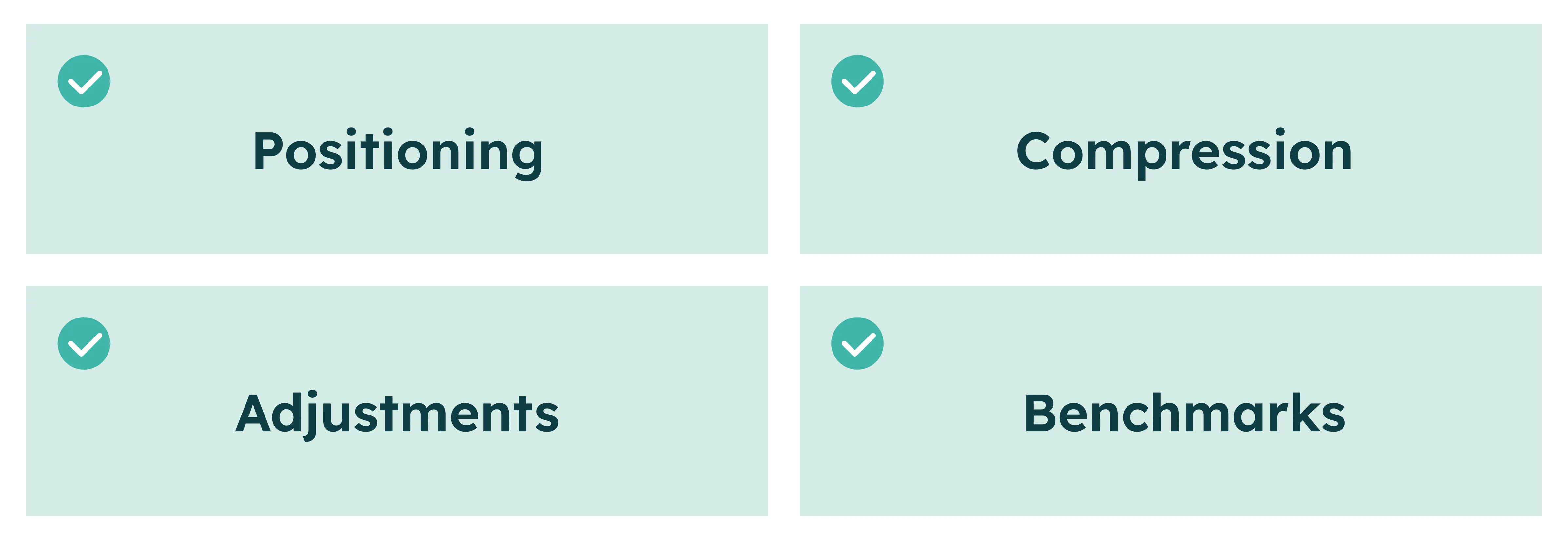
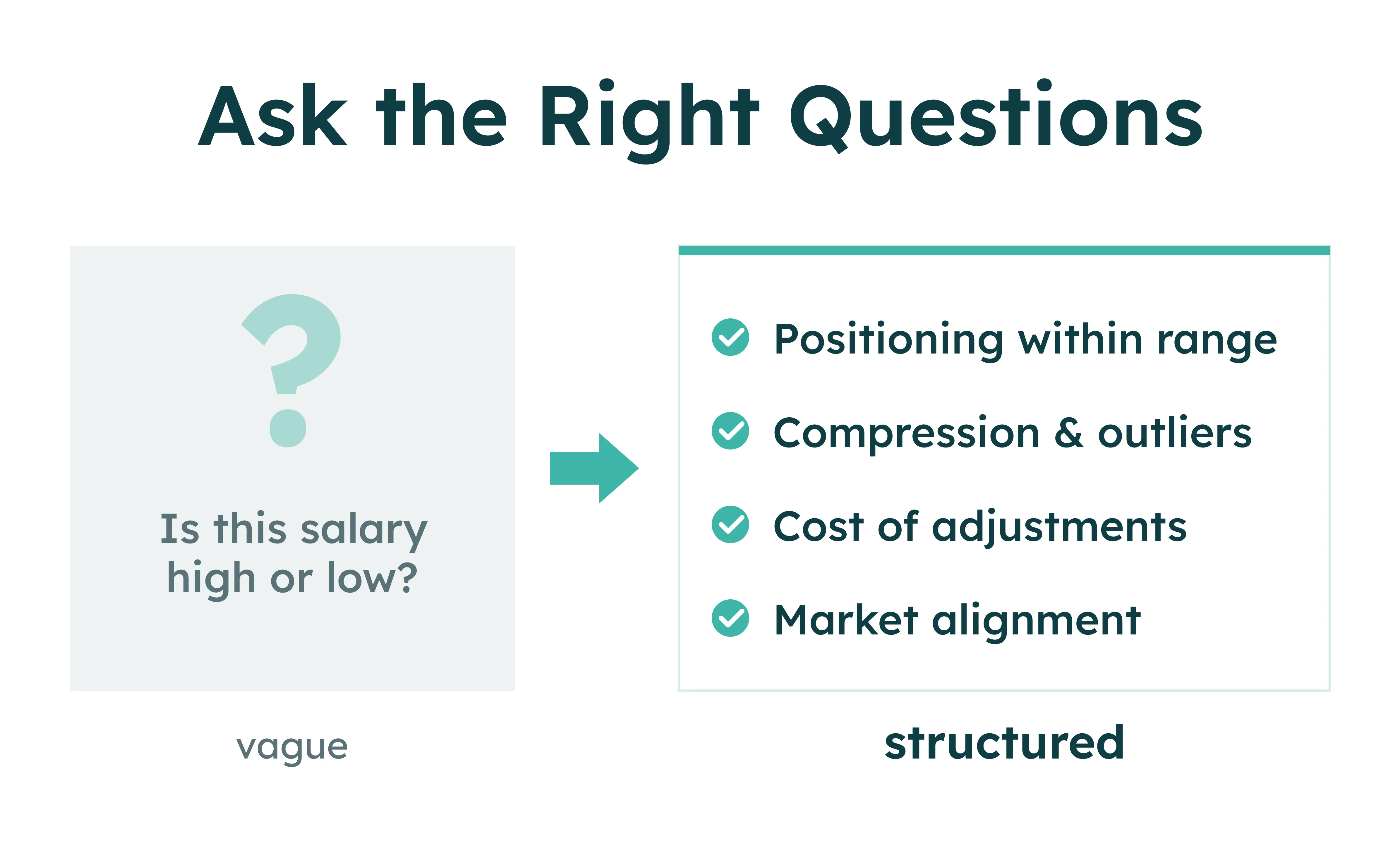
Compa-ratio analysis helps you move beyond “Is this salary high or low?” to structured questions about how pay actually works. gradar shows how employees are positioned within pay ranges, identify compression or outliers, assess the cost of adjustments and understand how internal pay aligns with market benchmarks.
Analyse compa-ratios across teams, functions and other organisational groups to uncover patterns, compression or inconsistencies. Interactive dashboards allow you to filter, scale and export visualisations, helping teams explore how pay positioning differs across populations.


Drill down into individual employee data to understand base pay and target compensation positioning within the pay structure. gradar can also estimate the cost of potential adjustments, such as raising salaries to band minimums or midpoints, supporting structured discussions with leadership and finance.
gradar combines internal compa-ratio analysis with external market benchmarks, helping you understand how salaries are positioned relative to both pay ranges and market rates. This provides a clearer foundation for compensation reviews, pay adjustments and transparent pay setting.

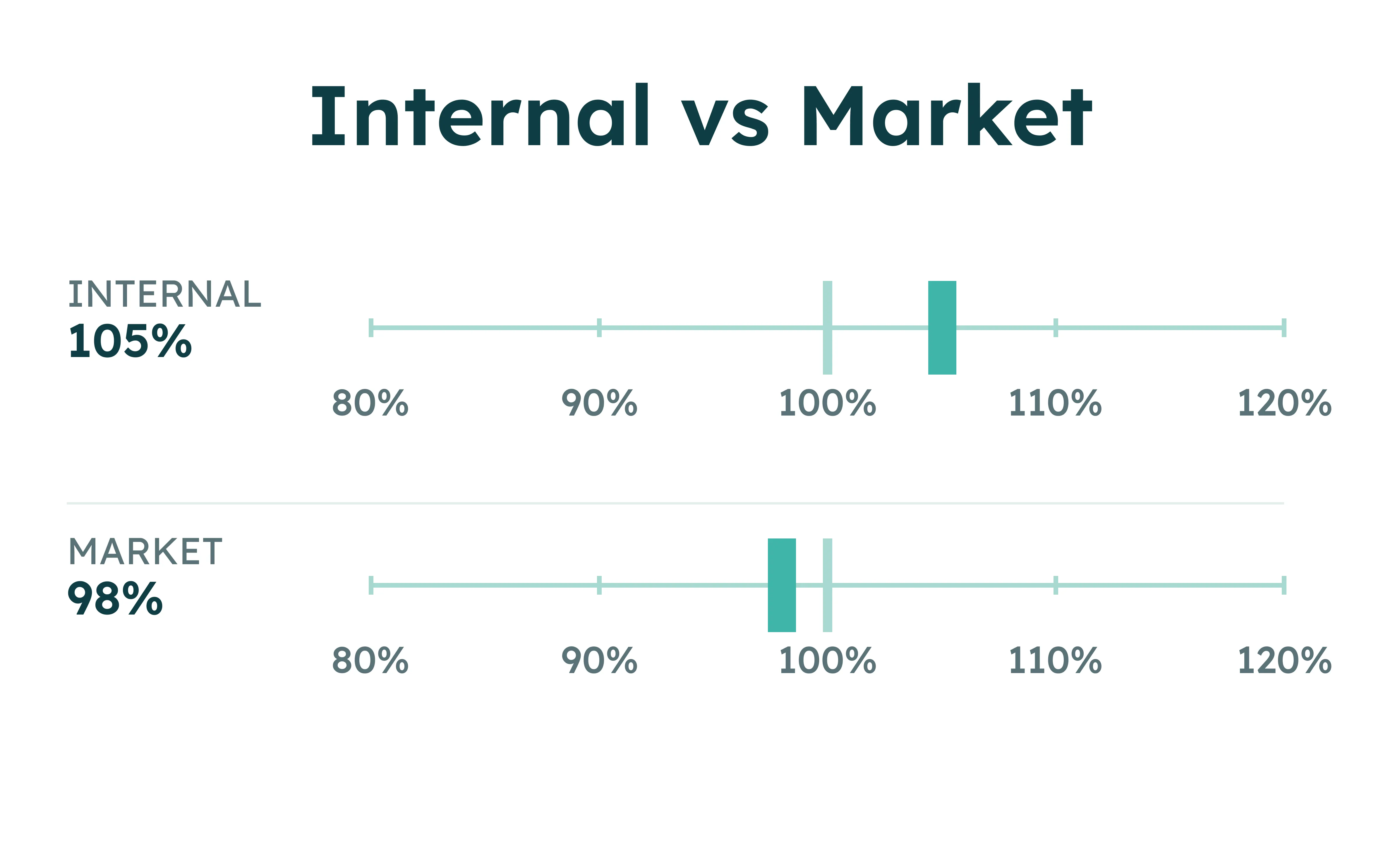
Compa-ratio analysis compares an employee’s salary to a reference point in the pay structure, usually the midpoint of the salary range for their role. This helps organisations understand how salaries are positioned within the structure and whether employees are paid below, at or above the intended pay level.
Compa-ratio is calculated by dividing an employee’s base salary by the midpoint of the salary range. A compa-ratio of 1.00 means the salary sits exactly at the midpoint, while values below or above show how far pay is positioned below or above that reference point.
Compa-ratio analysis helps organisations understand how pay is distributed across roles, grades and groups. It can reveal patterns in pay positioning, highlight compression or outliers and identify areas where pay decisions may be inconsistent across comparable roles.
To run compa-ratio analysis, organisations typically need employee pay data such as base salary and target compensation, job or level mapping for each employee and the salary ranges associated with those roles. Additional information such as location, legal entity or currency can also be included.
Yes. gradar allows organisations to analyse base salary as well as target compensation positioning. This helps compensation teams distinguish between issues related to base pay and those linked to variable pay or incentive structures.
Yes. gradar allows compa-ratio analysis to be segmented across teams, job families, levels, legal entities, locations or other organisational groups. This helps identify patterns and inconsistencies in how salaries are positioned across different populations.
Salary range penetration shows where an employee’s salary sits within the full salary range from minimum to maximum. It complements compa-ratio analysis by providing a broader view of progression through the range, particularly in structures where minimum and maximum boundaries are important.
By showing how salaries are positioned within pay ranges and across comparable roles, compa-ratio analysis provides a clear foundation for compensation reviews. It helps organisations identify adjustment scenarios, estimate cost implications and make more consistent, explainable pay decisions.
Analyse pay distribution, benchmark salaries & build transparent pay bands

Pay structures, market data & benchmarking – resources for fair pay.

gradar gives you clear insight into how pay is positioned - helping you make consistent, defensible decisions across reviews, budgeting and progression.
Job evaluation
Compensation
Pay transparency