Thank you! Your submission has been received!
Oops! Something went wrong while submitting the form.

gradar helps organisations analyse, structure and explain pay with confidence - creating the insight needed for fair outcomes and compliance with pay transparency legislation.


gradar gives you a clear view of how pay is distributed across roles, grades and groups by analysing current salary outcomes within your job architecture. This helps organisations identify patterns, inconsistencies or structural risks early, creating a reliable baseline before designing or adjusting pay structures.
Create clear pay ranges by grade and job family that define your ability and willingness to pay for work of a certain value. Design pay bands and pay groups that align evaluated job value with your pay philosophy - supporting transparent pay setting and progression policies as outlined in the EU Pay Transparency Directive.


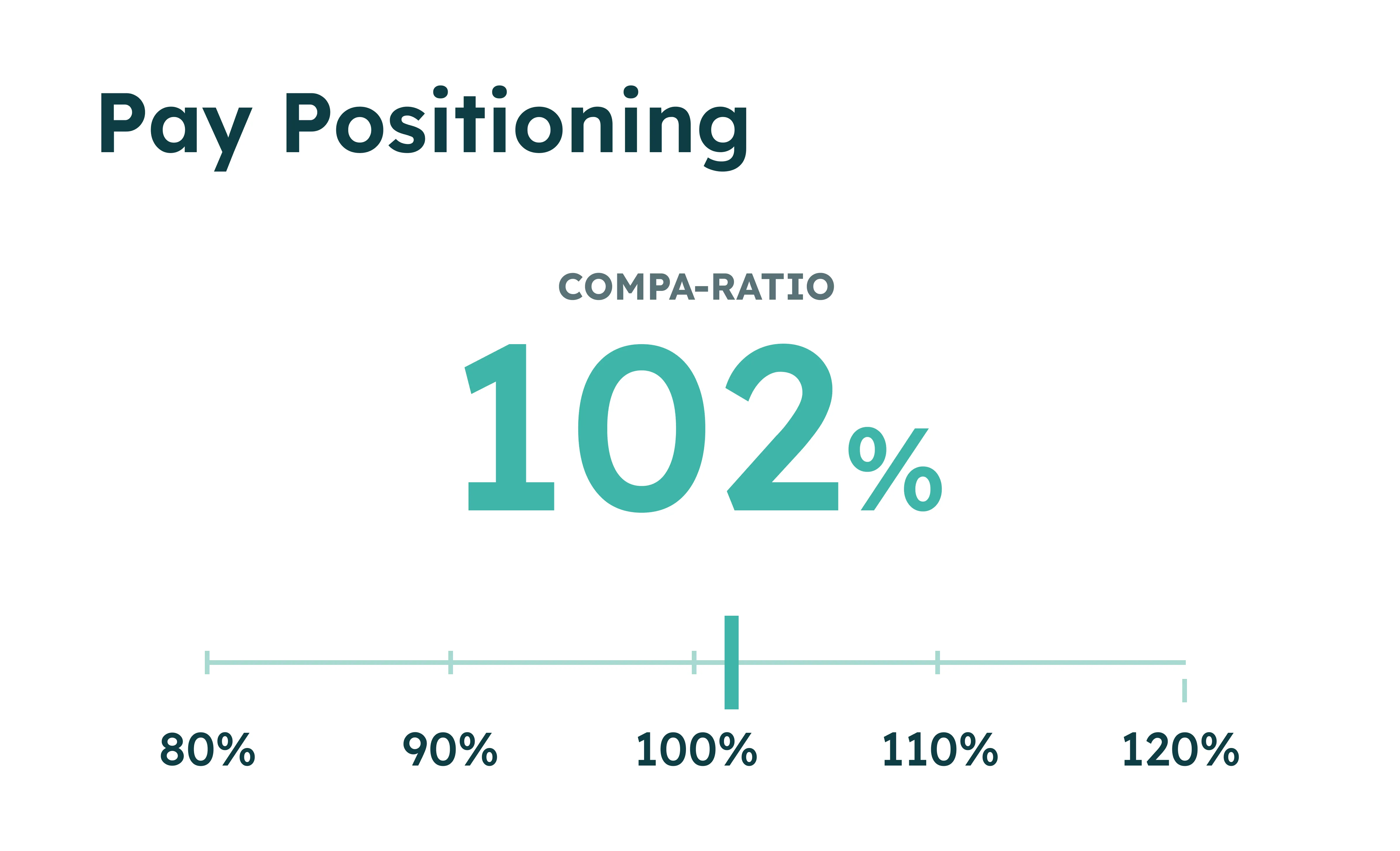
Understand where individual pay sits within defined salary ranges and how employees progress over time. gradar uses internal and external compa-ratio analysis to highlight positioning within pay bands, helping organisations identify compression, outliers and inconsistencies across comparable roles.
Compensation structures are not only a transparency tool - they are also an instrument for cost control. By linking job value, pay bands and salary positioning in one system, gradar helps organisations assess the cost implications of pay adjustments and manage compensation budgets in a structured, explainable way.

Compensation structuring in gradar means using a clear job and pay logic to analyse current pay outcomes, build transparent pay bands and explain pay decisions consistently. Instead of relying on scattered salary practices or individual negotiation outcomes, organisations can structure pay around evaluated job levels, job families and defined salary ranges. This creates a clearer and more consistent foundation for fair pay decisions and transparent communication—both internally and externally.
gradar supports pay transparency initiatives by helping organisations understand how pay is currently applied across roles, grades and groups, and then structuring pay into clear ranges and pay groups. By grounding pay decisions in documented job logic and structured salary analysis, organisations can explain pay decisions more consistently and communicate compensation more clearly—both to employees and during recruitment. Final legal interpretation and compliance responsibilities remain with the organisation.
Transparent pay bands give recruiters and hiring managers a consistent reference point when discussing compensation with candidates. Instead of negotiating salaries without structure, organisations can communicate a clear pay range aligned to the role’s job level and job family. This helps set expectations earlier in the hiring process and supports more consistent offers across comparable roles.
gradar helps organisations structure and explain how pay is set and how it progresses over time. Pay decisions can be grounded in evaluated job levels and grades, organised by job families where market differences matter, and expressed through defined pay bands. Tools such as pay positioning and compa-ratio analysis then show how salaries sit within these ranges and how they evolve over time. This structured approach supports clearer explanations of pay setting and pay progression policies, aligning with the transparency principles outlined in Article 6 of the EU Pay Transparency Directive.
To build meaningful pay bands, organisations typically start with a job architecture that defines job levels or grades and job families. Current pay data—such as base pay or target compensation—is then analysed alongside inputs from the organisation’s pay philosophy, including desired market positioning, range widths and progression approaches. If an organisation already has grades or levels, gradar can work with them directly; if not, analytical job evaluation can provide a consistent foundation.
Pay bands can be defined either by grade or level across the entire organisation, or by job family within a grade where market conditions differ significantly between roles. This allows organisations to balance transparency and consistency with the reality that different functions may compete in different labour markets.
Pay positioning describes where an employee’s salary sits within a defined pay range. gradar analyses positioning using tools such as internal and external compa-ratios, which show how pay compares with range reference points or market benchmarks. This insight helps organisations guide pay progression, budgeting and compensation decisions more consistently.
Yes. By analysing salary distributions and positioning across roles, levels and organisational groups, gradar helps highlight patterns such as pay compression, unusually wide pay spreads or inconsistent positioning between comparable roles. These insights help compensation teams identify areas where further review or adjustment may be needed.
gradar allows organisations to overlay external salary survey benchmarks onto their internal job and pay structures. By linking evaluated roles to relevant market benchmarks, organisations can validate the competitiveness of their pay ranges and use market data as an additional reference point when designing or reviewing compensation structures.
No. gradar is a decision-support system for job architecture and compensation governance. It provides analysis, structure and insight, but organisations define their own pay philosophy, approve pay ranges and make final compensation decisions based on governance processes, budgets and local requirements.
Most organisations achieve clearer and more transparent pay ranges, more consistent offers and progression decisions, and a stronger ability to explain how pay decisions are made. This structured foundation also supports pay transparency communication with employees and candidates, while strengthening internal governance around compensation.
Analyse pay distribution, benchmark salaries & build transparent pay bands

Pay structures, market data & benchmarking – resources for fair pay.

gradar helps your organisation structure an effective compensation system that ensures pay for work of equal value.
Job evaluation
Compensation
Pay transparency