Thank you! Your submission has been received!
Oops! Something went wrong while submitting the form.

gradar helps organisations analyse how pay is distributed across the organisation - providing the insight needed to understand current outcomes before designing or adjusting pay structures.

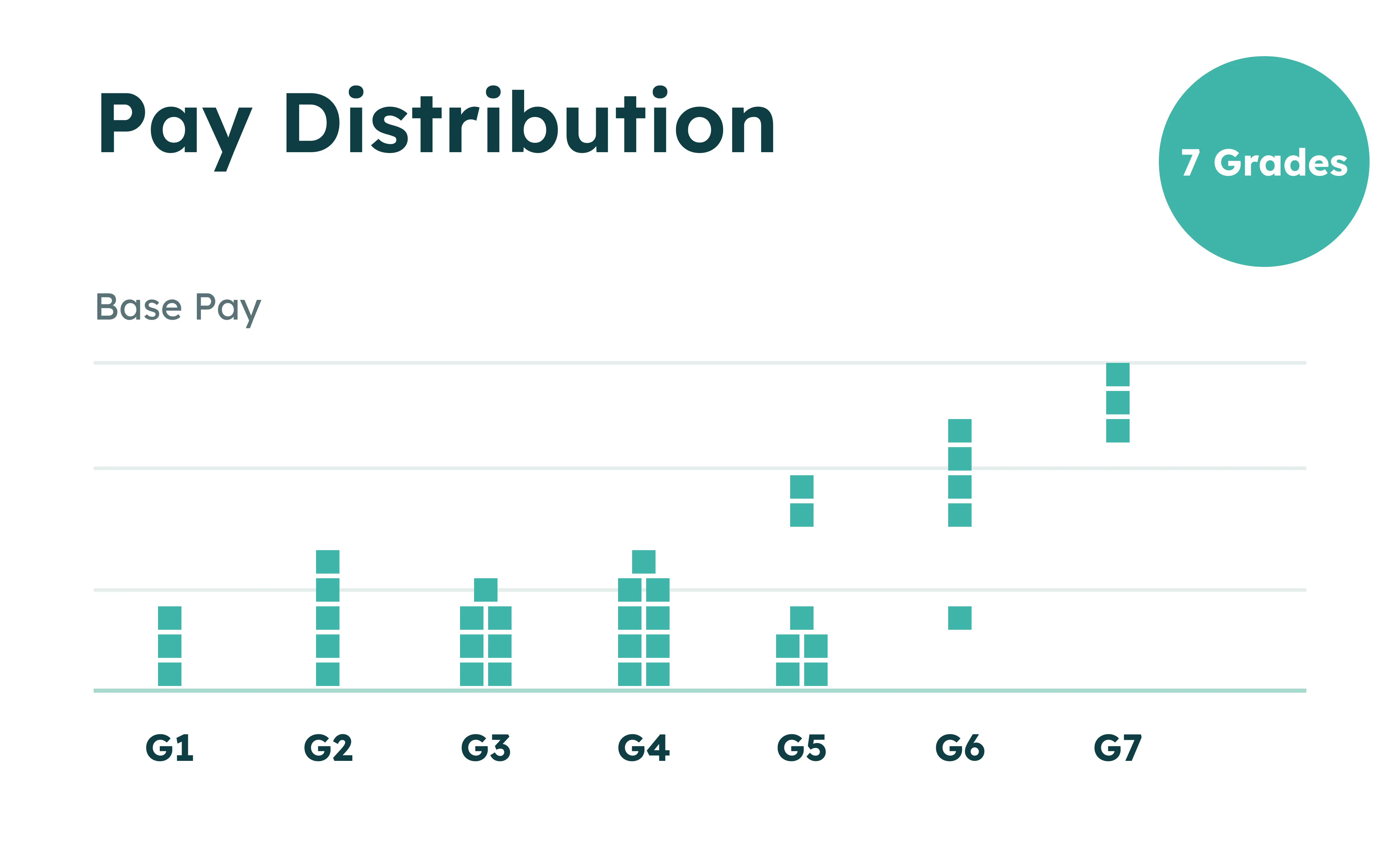
gradar shows how base pay and target compensation are distributed by grade or company-specific level, giving you a clear picture of current pay outcomes across the organisation. This helps understand how salaries are positioned within the structure and identify where pay may cluster, spread or diverge across levels.
Filter and analyse pay data by job family, organisational unit or legal entity to reflect how your organisation is structured and managed. By viewing pay outcomes across these dimensions, you can quickly identify patterns, differences or inconsistencies that may require closer review.
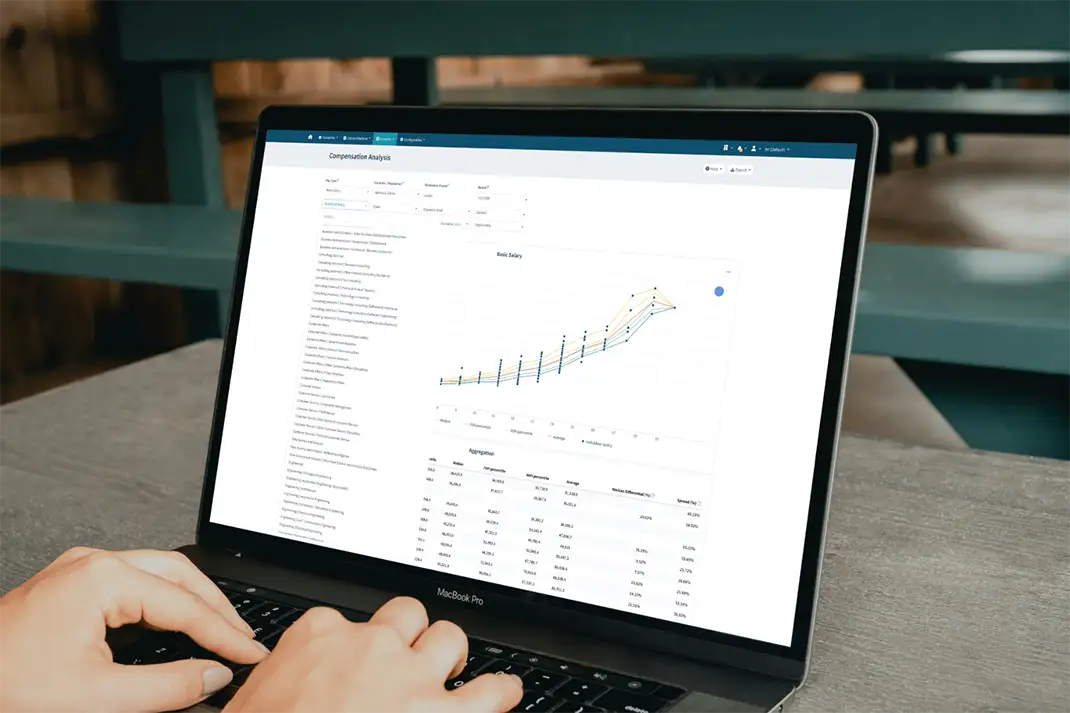

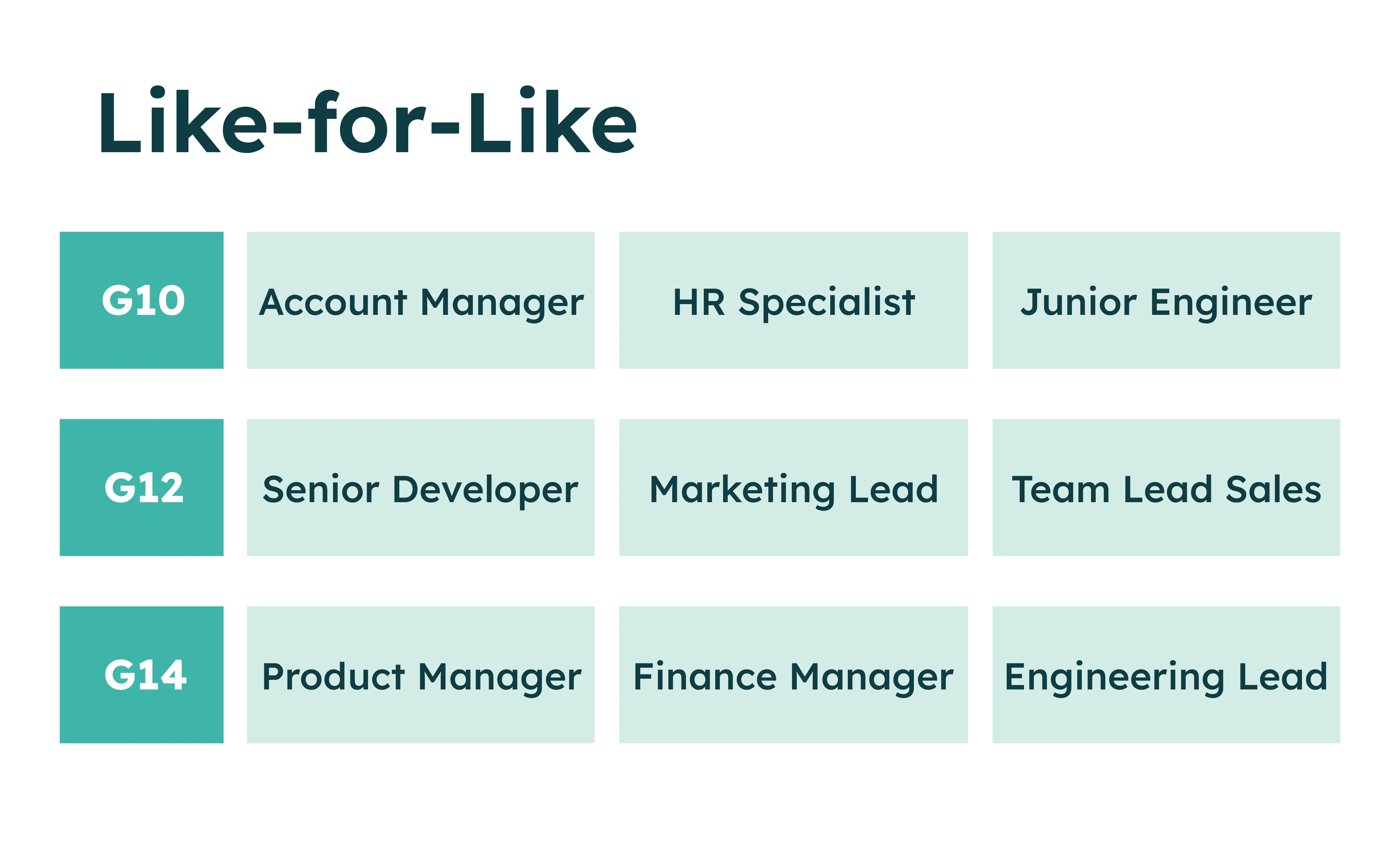
Compensation analysis in gradar is grounded in evaluated job levels, ensuring pay comparisons are made between roles of comparable job value. This structured approach reduces misleading comparisons based on job titles and supports more consistent analysis across job families and organisational groups.
By analysing distributions, averages, medians and percentiles across levels and groups, gradar helps highlight unusual pay patterns such as compression, wide pay spreads or inconsistencies across comparable roles. These insights provide a clear starting point for reviewing compensation decisions and improving pay structures.
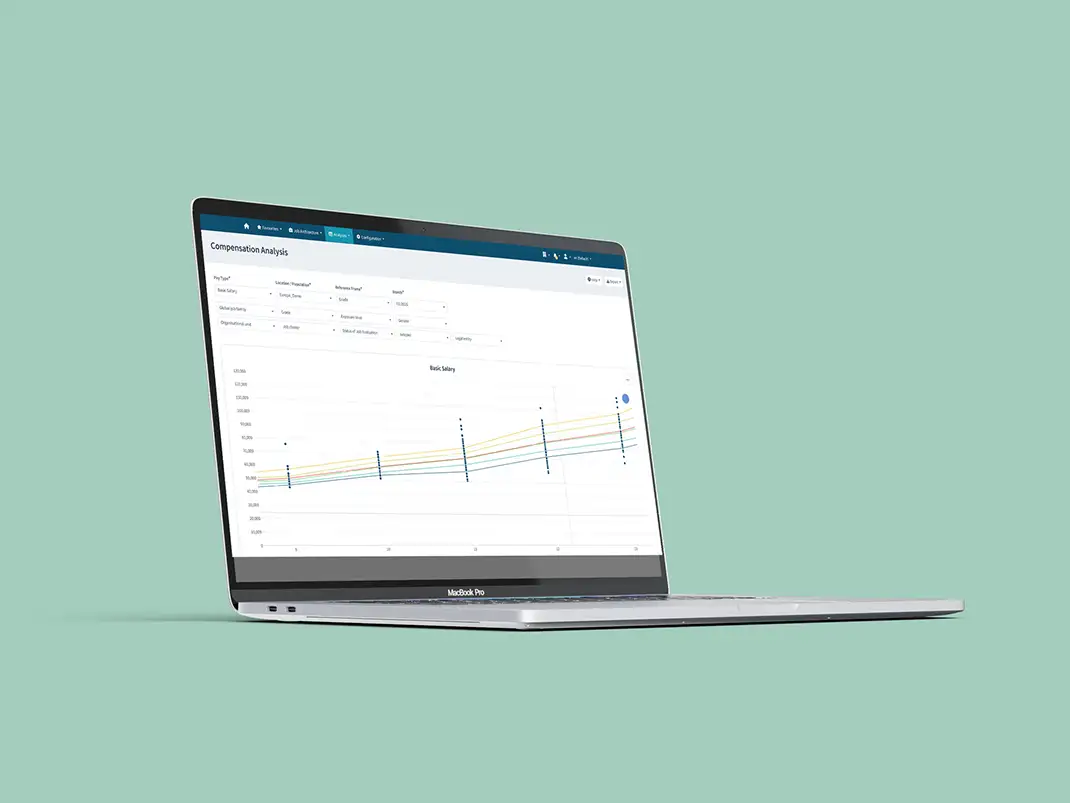
Compensation analytics in gradar helps organisations understand how salary and compensation data are distributed across the workforce. By analysing pay alongside job levels and organisational structure, HR and reward teams can clearly see pay outcomes before designing, adjusting or communicating compensation structures.
gradar allows organisations to analyse both base salary and target compensation. Target compensation typically includes base pay plus target variable components, depending on how compensation is defined internally. This allows teams to analyse both fixed salary positioning and overall compensation outcomes.
Pay comparisons in gradar are grounded in evaluated job levels such as grades or company-specific levels. This ensures salary analysis is based on comparable roles and job value rather than job titles alone, supporting more consistent and meaningful compensation analysis.
With gradar, organisations can analyse up to ten different pay types, including base salary, guaranteed base salary, target compensation, actual compensation, benefits and allowances. This enables organisations to monitor both base salary positioning and total compensation: target compensation typically consists of base salary plus intended variable components, depending on how compensation is defined internally.
gradar provides interactive charts for quick insight alongside detailed statistics for deeper salary analysis. Organisations can review averages, medians, percentiles and salary distributions across job levels or organisational groups, supporting both executive-level discussions and detailed compensation reviews.
Yes. By analysing pay distributions across levels and organisational groups, gradar helps identify unusually wide salary spreads, pay compression between levels and inconsistencies across comparable roles. These insights support deeper investigation and more informed compensation decisions.
Compensation analytics provides the baseline insight needed to design or adjust pay structures. By understanding current salary positioning across roles and levels, organisations can define more appropriate pay bands, reference points and compensation policies.
No. gradar is not a payroll system. It is a compensation analytics and decision-support platform for job architecture and pay management. Organisations typically import compensation data from HRIS or payroll systems and analyse it in gradar alongside job levels and pay structures.
Analyse pay distribution, benchmark salaries & build transparent pay bands
Pay structures, market data & benchmarking – resources for fair pay.

Use gradar’s compensation analytics as the factual baseline for building pay bands, adjusting structures and making broader pay decisions.
Job evaluation
Compensation
Pay transparency