Thank you! Your submission has been received!
Oops! Something went wrong while submitting the form.

gradar helps organisations benchmark salaries quickly and reliably – connecting evaluated job roles with third-party market data to support fair, competitive and explainable pay decisions.


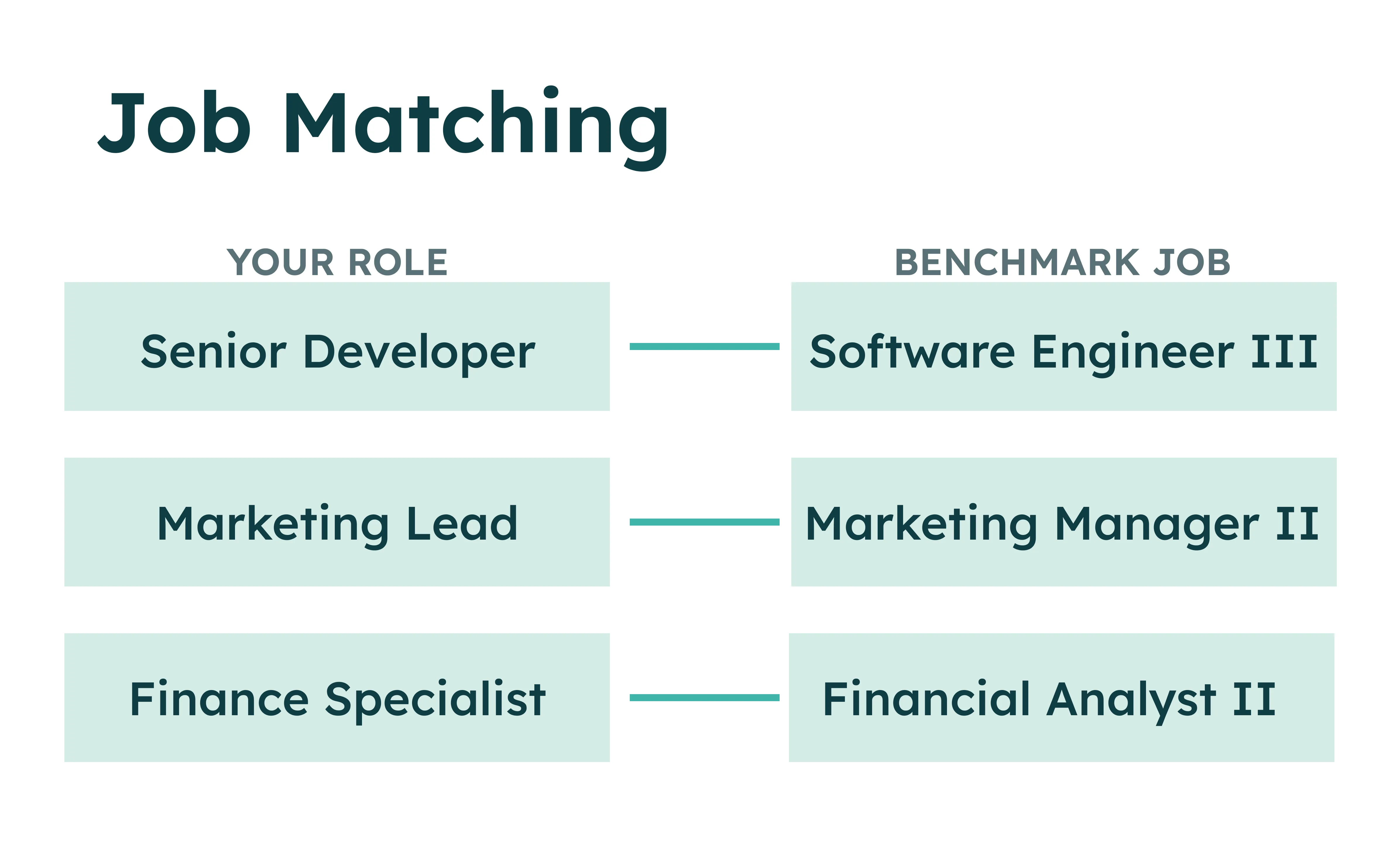
Salary benchmarking only works when roles are compared on a like-for-like basis. gradar starts with analytical job evaluation and links each evaluated role to the appropriate benchmark job, ensuring comparisons remain consistent across countries, business units and HR teams.
gradar automatically converts job grading results into benchmark job codes, allowing you to compare internal pay against market rates quickly and consistently. Roles are matched using career path, job grade and global job family, creating a repeatable method for linking internal roles to third-party salary surveys.

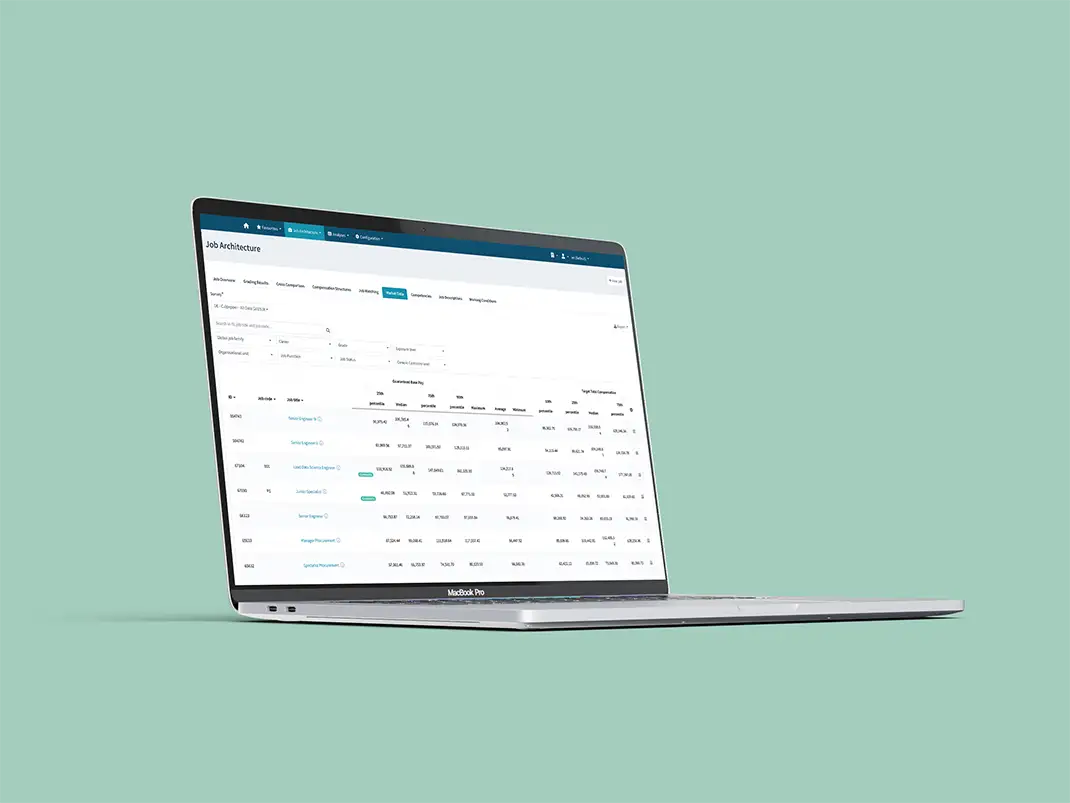
gradar is vendor-agnostic and works with market data from any compensation survey provider. Organisations can upload their preferred data sources and benchmark roles using the surveys that best reflect their industry, geography and talent markets – then view the results in a clear, interactive dashboard.
Use market benchmarks to inform pay bands and compensation structures. gradar allows organisations to aggregate multiple third-party market data sources and display trend lines alongside internal pay structures, helping align salary ranges with both job value and external market competitiveness.


Salary benchmarking in gradar means comparing your internal pay levels with external market data using a consistent job-based matching approach. Instead of relying on job titles alone, gradar links evaluated roles to benchmark jobs from compensation surveys, ensuring market comparisons are based on structured job data and clearly defined job value.
Once roles are evaluated and matched to benchmark job codes, gradar can display relevant market data directly on job profiles and in reports. Because the job matching logic is already structured and repeatable, organisations can run benchmarking analysis quickly without manually interpreting survey data for each role.
Roles are matched using the structure of your job architecture, typically including career path, job grade or level and global job family. These elements are used to link each evaluated role to the most appropriate benchmark job or jobs within the selected salary survey sources.
The Job Matching Module is a web-based translation matrix that converts analytical job evaluation results into benchmark job matches from global and local salary surveys. It creates a consistent link between your internal job architecture and external survey benchmark job codes, turning benchmarking into a repeatable method rather than an ad-hoc interpretation exercise.
Not necessarily. In many cases, one evaluated role may correspond to more than one benchmark job depending on how your organisation defines roles and how benchmark jobs are structured within survey data. Organisations typically define a matching policy that ensures consistency across HR teams and regions.
gradar works with market data from any third-party compensation survey provider, provided the data is available in a format that can be uploaded into the system. Many organisations use multiple survey sources in parallel to reflect different industries, regions or employee populations.
Yes. gradar supports benchmarking for different compensation elements depending on the available survey data. This typically includes Base Pay and Target Total Compensation (TTC), allowing organisations to analyse both fixed and total reward positioning.
Yes. gradar supports location-specific benchmarking by linking benchmark job codes to configurable locations. This allows organisations to compare pay appropriately by country, labour market or geographic scope.
gradar allows organisations to overlay external benchmark data with internal pay structures so HR and compensation teams can see how salaries align across roles, grades or levels and job families. Market data can also be displayed directly on job profiles to support role-by-role pay decisions.
Yes. gradar offers a Market Data add-on that allows organisations to access selected third-party salary survey datasets directly within the platform. This makes it easier to integrate market benchmarking into compensation analysis and pay structure design.
Analyse pay distribution, benchmark salaries & build transparent pay bands

Pay structures, market data & benchmarking – resources for fair pay.

gradar brings job evaluation, compensation structures and market benchmarking together - so you can set salaries at the right level.
Job evaluation
Compensation
Pay transparency
