Thank you! Your submission has been received!
Oops! Something went wrong while submitting the form.

Pay management combines compensation analytics and compensation structuring to help organisations understand how pay is distributed, define pay levels and operate fair, grade-based pay structures.
At its core, effective pay management answers three questions:
How are salaries currently distributed?
How should jobs be paid relative to each other?
How can pay decisions remain fair, competitive and explainable over time?
A grade structure is a hierarchy of levels into which jobs with broadly comparable requirements are placed.
Grades provide a consistent way to group roles based on job value — forming the backbone of pay analysis, benchmarking and progression.
In gradar, grades are the result of analytical job evaluation across three distinct career paths:
Individual Contribution
From unskilled and semi-skilled roles to specialists, professionals and strategic experts.
People Management
Roles focused on disciplinary leadership, organisational responsibility and budget accountability.
Project Management
Roles responsible for planning and delivering time-bound initiatives involving people, budgets and resources.
Each grade reflects core job dimensions such as timeframe, budget responsibility, leadership span and complexity.
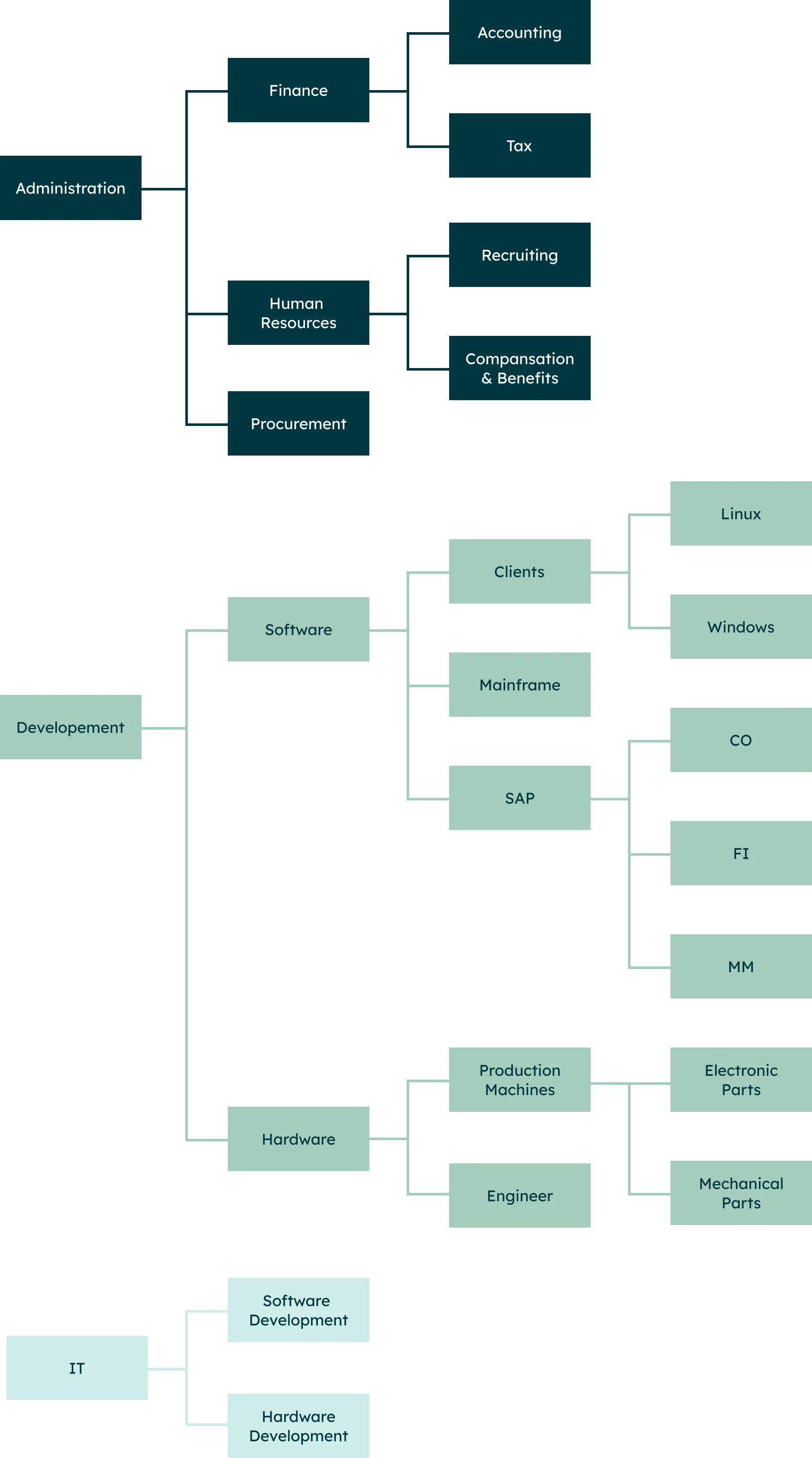
A grade structure becomes a grade and pay structure when pay bands are attached to each grade.
Pay structures describe an organisation’s willingness and ability to pay, translating job value into monetary ranges.
Pay bands (also called ranges, brackets or scales) define the minimum and maximum pay for each grade.
They:
Set clear boundaries for pay decisions
Support progression based on contribution, performance or tenure
Reduce arbitrary or inconsistent salary outcomes
Pay bands are informed by:
Internal job evaluation results
Current salary distributions
External market benchmarks
In graded structures, pay bands are typically narrower than in broad-banded systems, allowing for tighter control and clearer differentiation.

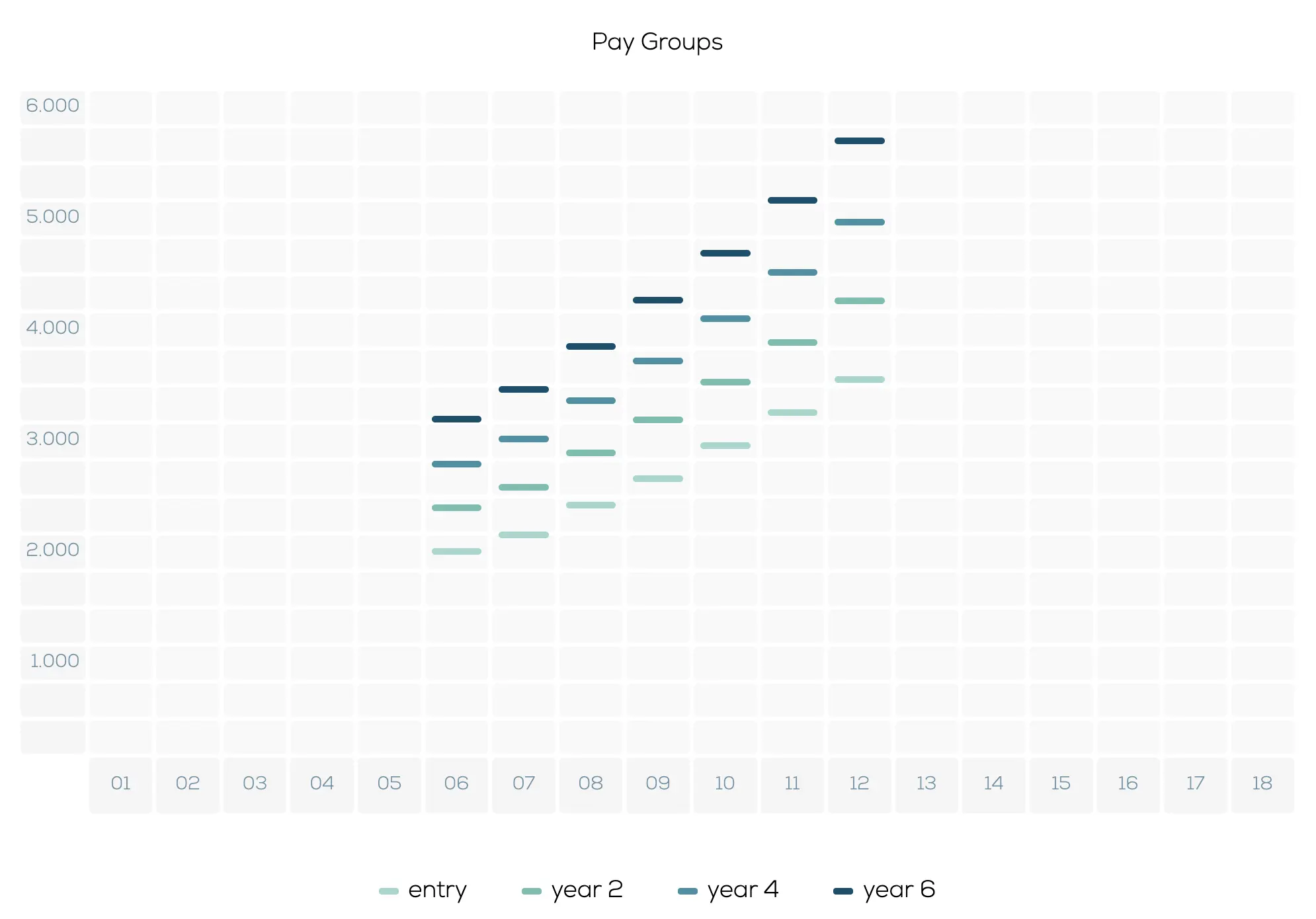
Some organisations introduce pay groups within bands to indicate expected pay progression over time.
These are common in collective bargaining environments and often show:
Entry pay
Progression milestones
Tenure-based reference points
Pay groups are especially useful where monthly wages or structured increments apply.
Not all employees progress through pay structures in the same way. Pay positioning and movement within pay bands may be influenced by factors such as:
Performance and contribution
Job tenure and experience
Skill development and competency growth
Market scarcity or critical skill demand
Internal progression and promotion readiness
Many organisations use these factors to determine how employees move through salary ranges over time, helping reward individual growth while maintaining overall structural consistency.
A clear approach to pay differentiation supports fair and transparent decision-making - ensuring salary progression reflects both organisational policy and individual contribution.
Compensation structuring is not a formula — it’s an informed design process.
Effective pay band modelling draws on four sources:
Internal data
Job evaluation results and analysis of current salaries.
Market benchmarks
External pricing for comparable roles.
Stakeholder values
Organisational culture, risk appetite and strategic goals.
Professional judgement
Expertise in balancing fairness, flexibility and affordability.
The process starts by analysing how salaries are distributed by grade.This includes:
This analysis highlights where pay is tightly clustered and where it is widely spread — informing how challenging pay band modelling may be.
Market benchmarking involves:
Compa-ratios compare actual pay to market reference points (e.g. median). For example, an overall compa-ratio of 98% indicates pay sits 2% below market on average.gradar automates the alignment of job grades with benchmark roles across major salary surveys and collective agreements.
Using internal and external insights, pay bands are designed around grade-specific midpoints.
Typical approaches include:
Some structures use segmented bands (e.g. lower, middle and upper thirds) to support differentiation.
Once pay bands are defined, organisations can begin transitioning employees into the new structure.
This includes:
This step helps organisations manage implementation in a practical and controlled way - balancing internal fairness, budget considerations and employee expectations.
Where gaps exist, businesses may choose to:
A structured transition plan ensures the move to pay bands is transparent, manageable and aligned with wider reward strategy.
Research shows pay satisfaction is more strongly linked to perceived fairness than to process alone.
Without clear structures:
Fairness cannot be demonstrated
Decisions become harder to explain
Bias and inconsistency increase
Job evaluation and structured pay systems are essential tools for achieving equity, transparency and defensible pay decisions.
Pay structures, market data & benchmarking – resources for fair pay.

Analyse pay distribution, benchmark salaries & build transparent pay bands