Thank you! Your submission has been received!
Oops! Something went wrong while submitting the form.

Job architecture for pay transparency

gradar provides the structure needed for pay transparency. By defining clear roles, levels and career paths - you create a consistent framework for fair pay, comparability and compliance.


Smiling man sitting at a desk
Three boxes each with a checkmark icon and labels: Responsibility, Progression, and Job Value.
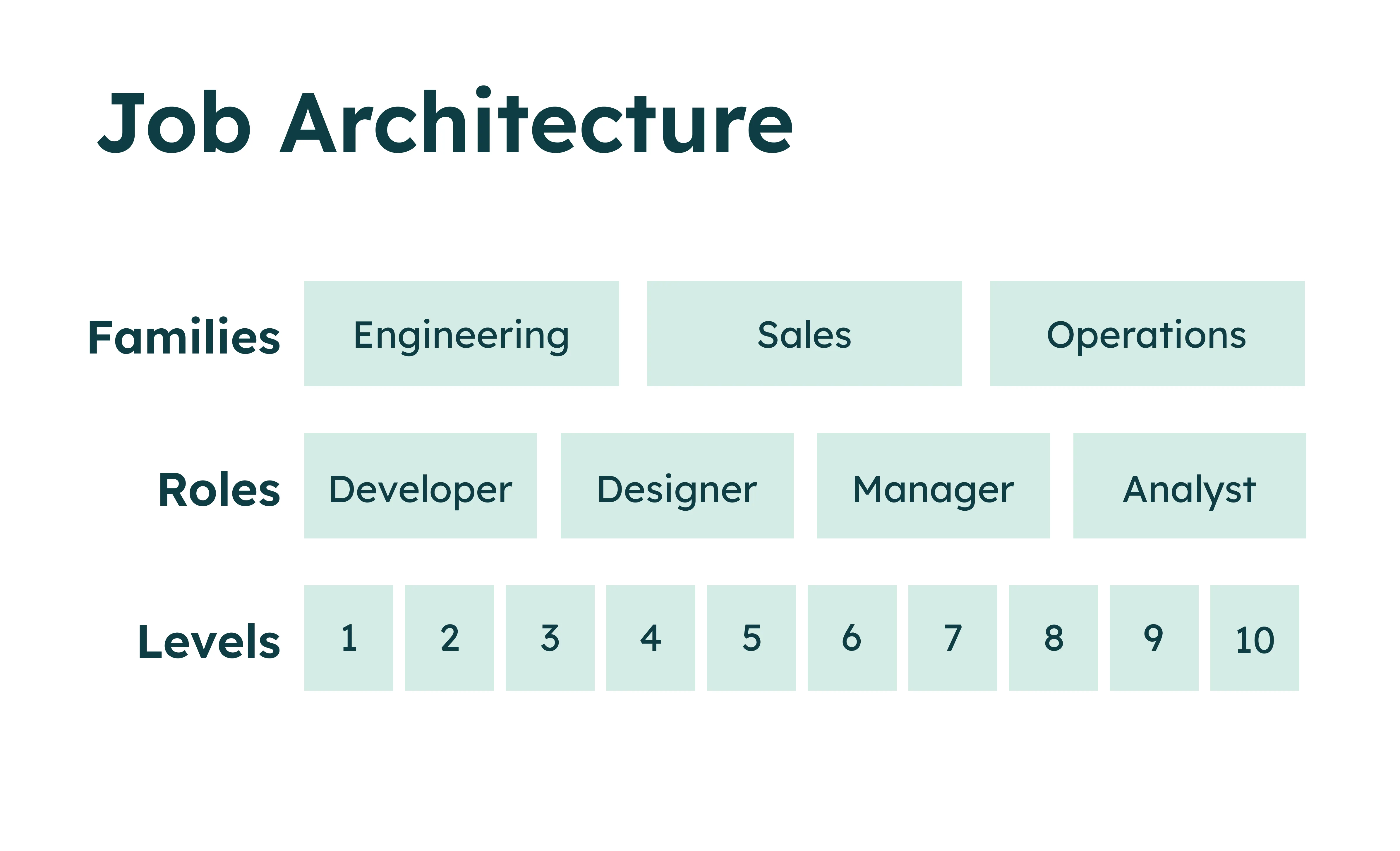
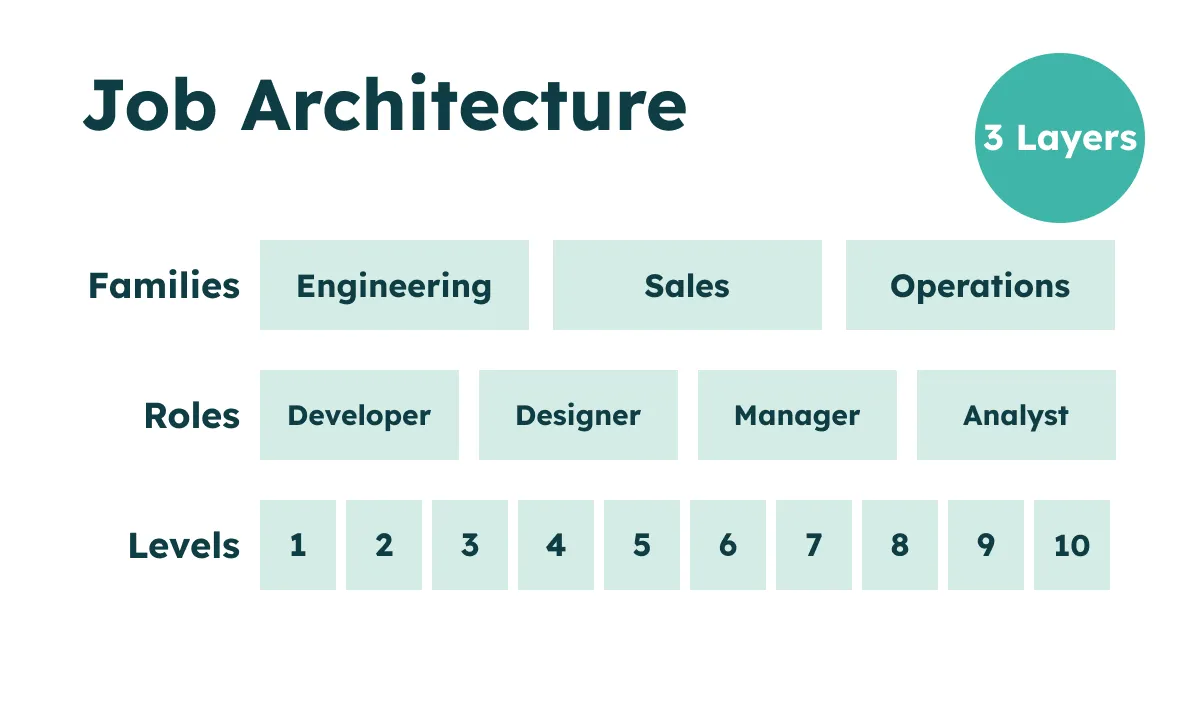
Job architecture diagram with 3 layers: Families (Engineering, Sales, Operations), Roles, and Levels 1 to 10.

Structured job architecture

gradar helps you design a job architecture built on job families, roles and evaluated job levels. This creates a shared framework for understanding responsibility, progression and job value. A clear role structure is the foundation for pay transparency, making it easier to explain how roles are defined and compared.

Equal value framework

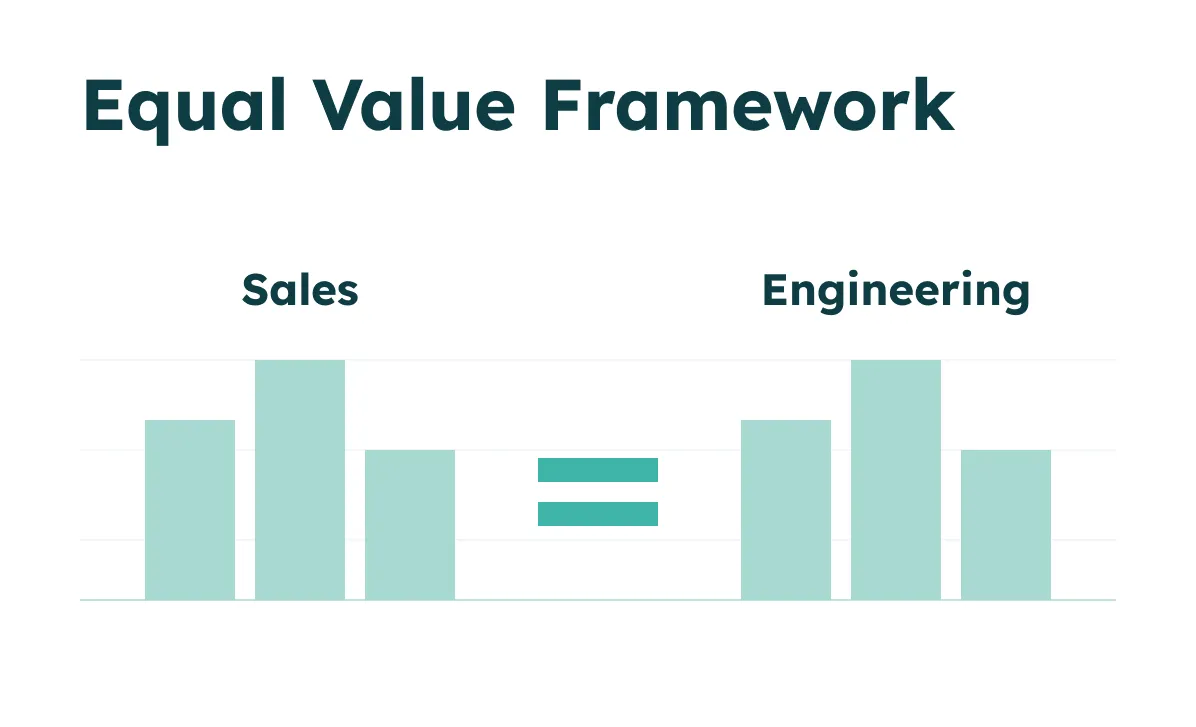
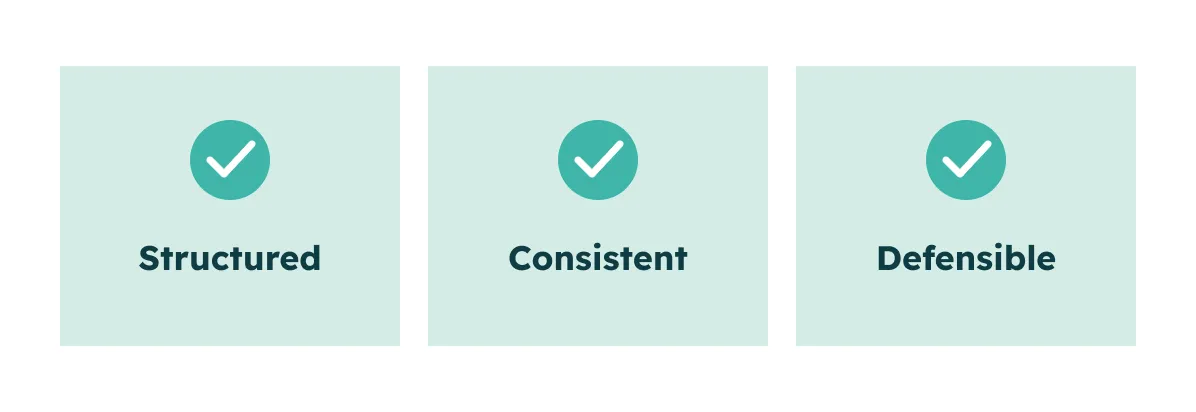
gradar enables consistent role comparison across functions by evaluating jobs based on their requirements and responsibilities. This provides a structured, defensible basis for defining work of equal value across your organisation. With consistent evaluation criteria, organisations can support transparent pay decisions.


Smiling woman in a business suit looks up while sitting at a table with laptops in an office.
Bar chart titled Equal Value Framework showing three equal bars for Sales and Engineering with two equal signs in the center.
Three boxes with checkmarks labelled Structured, Consistent, and Defensible on a pale green background.
Smiling man sitting at a desk
Icon of a user with labels: Grade 12, Sales Department, and Professional.
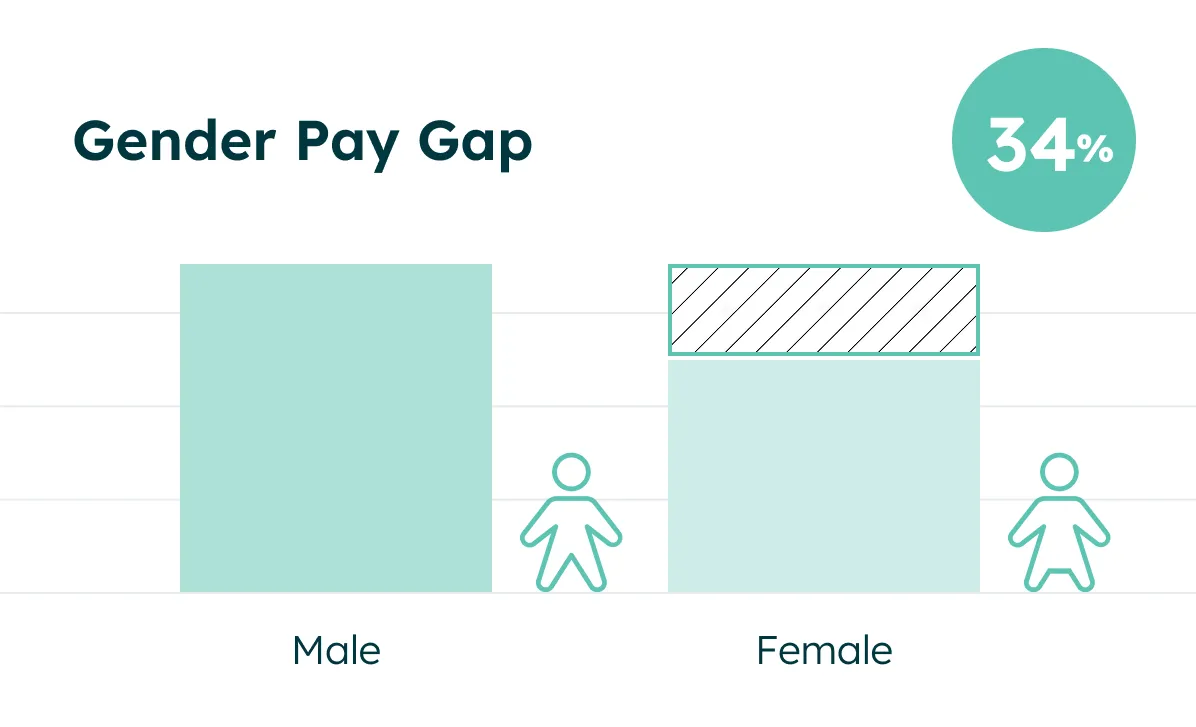
Bar chart showing a 34% gender pay gap with male earnings higher than female earnings.

Connects jobs, JDs and competencies

gradar links job architecture with job descriptions, competencies, skills and pay data - ensuring role structures support fair pay, development and transparent decisions.

Organisation-wide structure

Use a standardised job architecture across teams, entities and countries to ensure roles are defined and compared consistently. gradar helps maintain comparability across functions while keeping job structures manageable. This framework supports transparent pay policies and clear communication around pay progression.

Smiling woman in a business suit looks up while sitting at a table with laptops in an office.
Bar chart showing external compa-ratio analysis with the highest bar at 100% and lower bars at 80%, 90%, 110%, 120%.
Green circle with a white checkmark and text saying Job description ready to publish.
Woman with glasses smiling in office hallway holding a tablet with glass partitions around.
Three green checkmarks above words: Responsibility, Progression, and Job Value on light green blocks.
Job architecture chart showing families (Engineering, Sales, Operations), roles, and levels 1 to 10.

Structured job architecture

gradar helps you design a job architecture built on job families, roles and evaluated job levels. This creates a shared framework for understanding responsibility, progression and job value. A clear role structure is the foundation for pay transparency, making it easier to explain how roles are defined and compared.

Equal value framework

gradar enables consistent role comparison across functions by evaluating jobs based on their requirements and responsibilities. This provides a structured, defensible basis for defining work of equal value across your organisation. With consistent evaluation criteria, organisations can support transparent pay decisions.

Person at a desk writing, with a computer showing a job architecture chart on screen.
Two small groups of business people stand in an office lobby discussing documents and a tablet.
Three boxes each with a checkmark icon and labels: Responsibility, Progression, and Job Value.

Connects jobs, JDs and competencies

gradar links your job architecture to job descriptions, competencies and pay data so that roles, expectations and development pathways stay aligned over time. Changes in responsibilities or scope are reflected consistently across the organisation – supporting talent management and pay transparency.

Organisation-wide structure

Use a standardised job architecture across teams, entities and countries to ensure roles are defined and compared consistently. gradar helps maintain comparability across functions while keeping job structures manageable. This framework supports transparent pay policies and clear communication around pay progression.
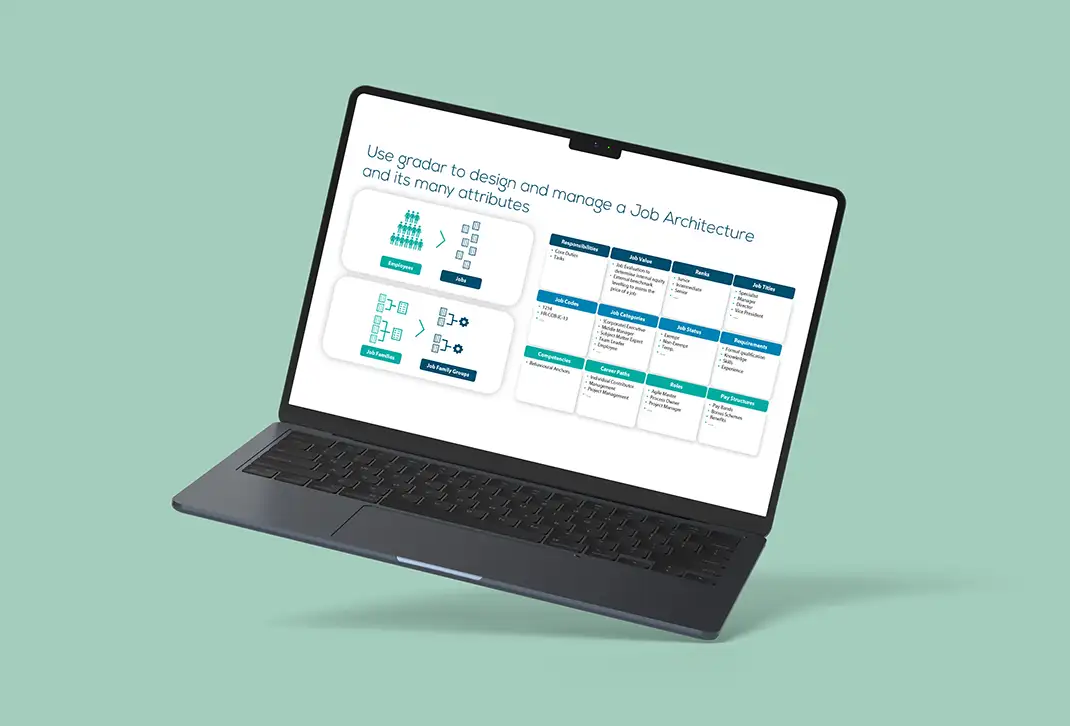

Laptop screen showing job architecture design with employees, jobs, job families and attributes tables.
1
What a job architecture is (in practice)

A job architecture is a systematic framework that links employees to their local positions and connects those positions to standardised jobs in a global structure. It organises work by:

job family / discipline

job level (via analytical job evaluation)

role requirements

career paths and levels

This is the foundation for pay transparency, esp. pay setting and pay progression policy: you can only communicate pay ranges and progression credibly when roles and levels are defined consistently.

2
How gradar helps you design and manage a job architecture

gradar is your single reference point for job-related data—and the infrastructure for:

Structured assessment of the current state

Build a reliable baseline across:

organizational units

job families

jobs and positions

job status and other governance categories

Requirements-based level hierarchy through analytical job evaluation

Create a level structure based on consistent evaluation criteria—so “Level 5” means the same thing across functions.

Harmonization of job descriptions, titles, and career levels

Standardize naming, descriptions, and progression logic to reduce duplicates, title inflation, and inconsistent leveling.

Development of pay structures

Use the consistent job and level framework to develop pay structures that support:

internal equity (fairness across comparable roles)

market competitiveness (clear benchmarking logic)

Competencies by job family and level

Define expectations and progression criteria by family and level—so career paths are transparent, not mysterious.

3
What you gain (outcomes)

Fairer, more consistent pay decisions through role comparability

Clear career paths linked to levels and expectations

Stronger governance across countries, entities, and business units

A scalable foundation for pay transparency communication and policy alignment

Explore our job evaluation approach

A strong job architecture starts with structured job evaluation - discover how gradar helps organisations assess roles consistently and define work of equal value.
Businesswoman using a stylus on a digital tablet at a bright office desk with pens and papers.

Job architecture FAQs

What is a job architecture in practice?

A job architecture is a structured framework that links employees to their positions and connects those positions to standardised roles within a broader organisational structure. In practice, it organises work by job family or discipline, defines job levels through analytical job evaluation, and clarifies role requirements, career paths and progression levels. By creating a shared framework for how roles are defined and compared, a job architecture helps organisations manage work consistently across teams, functions and locations.

Why is a job architecture important for pay transparency?

A clear job architecture provides the foundation for credible pay transparency. Organisations can only communicate pay ranges and explain pay progression when roles and levels are defined consistently. When comparable roles sit within the same job families and levels, it becomes easier to justify pay decisions, maintain internal fairness and communicate how employees can progress over time.

How does gradar support the design and management of a job architecture?

gradar acts as a central reference point for job-related data, helping organisations design, manage and maintain their job architecture in one place. The platform supports a structured assessment of the current state of roles across organisational units, job families, jobs and positions, and governance categories such as job status. By consolidating this information into a single system, organisations gain a clear and reliable baseline for building a consistent role structure.

How are job levels defined in gradar?

Job levels in gradar are created through analytical job evaluation. Roles are assessed using consistent, requirements-based criteria so that each level represents a comparable level of responsibility, complexity and scope. This ensures that a given level carries the same meaning across different functions and teams, allowing organisations to compare roles more fairly and consistently.

Can gradar help standardise job descriptions, titles and career levels?

Yes. gradar helps organisations harmonise job descriptions, titles and career structures across the organisation. By standardising naming conventions, role descriptions and progression logic, companies can reduce issues such as duplicate roles, title inflation and inconsistent levelling. This creates a clearer and more manageable role framework for both HR teams and employees.

How does a job architecture support pay structures?

Once roles and levels are defined consistently, organisations can use that structure to design pay ranges and salary bands. A well-defined job architecture makes it easier to align pay decisions with internal equity—ensuring comparable roles are rewarded fairly—while also supporting market competitiveness through consistent benchmarking against external salary data.

How do competencies fit into a job architecture?

Competencies can be defined by job family and level, helping organisations clarify what success looks like at different stages of a career path. This makes expectations and progression criteria more transparent, allowing employees to understand how roles develop over time and what skills or behaviours are required to move to the next level.

What outcomes can organisations expect from a strong job architecture?

A well-designed job architecture supports fairer and more consistent pay decisions by ensuring roles are comparable across the organisation. It also creates clearer career paths linked to defined levels and expectations, strengthens governance across countries, entities and business units, and provides a scalable foundation for pay transparency communication and policy alignment.

Job architecture to support fair pay

gradar's clear job architecture makes roles comparable, progression transparent and pay decisions consistent.

Job evaluation

Compensation

Pay transparency