Thank you! Your submission has been received!
Oops! Something went wrong while submitting the form.

Artificial intelligence is shaking things up across industries, and HR is no exception. From speeding up hiring to boosting employee engagement to keeping things compliant, AI has the power to make HR smoother and smarter. But how exactly can AI be leveraged in HR, and what are the best practices - as well as the potential pitfalls - that all professionals need to know?
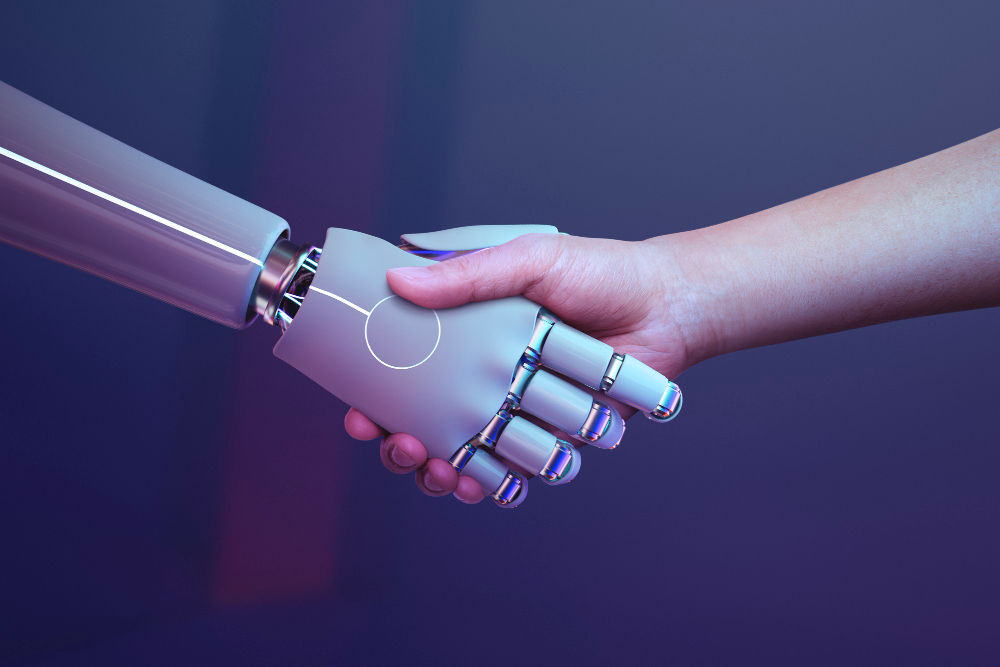
Put simply, AI refers to computer systems that can perform tasks that would typically require human intelligence - think planning, problem-solving, and smart decision-making.
It’s a broad field that’s evolving at lightning speed. There’s generative AI, a type of artificial intelligence that creates new content such as text, images, videos, or even code. Then there’s machine learning (ML), which enables computers to learn from data and make decisions without being explicitly programmed. Instead, ML algorithms recognize patterns and make predictions based on past experiences - just like us humans.
Both of these AI subsets can be leveraged in HR to make things smoother, smarter and faster.
AI is an undisputedly powerful tool. But this great power doesn’t come without risk. The bottom line is that unremedied errors or biases in AI can seriously affect people’s careers, pay and lives.
First up, AI systems can inadvertently amplify biases. For example, if a hiring algorithm is trained using historical data - and past hiring decisions favored certain demographics - it can unintentionally reinforce discrimination. This is a pay equity no-go, and could have serious legal ramifications for the organisation in question.
HR deals with huge amounts of sensitive employee data. Using AI, especially third-party APIs such as ChatGPT, involves inputting such data into those systems. When not handled securely? AI tools could lead to data breaches or misuse of personal information.
Another risk comes with rubber-stamping AI outputs without critical review. Sure, AI can scan resumes and analyse employee performance, but it doesn’t understand human emotions or workplace culture. An over-reliance on AI can make HR feel impersonal and devoid of empathy - something that’s sure to alienate employees.
The EU AI Act - an act that entered into force in August 2024 to address the risks of rapidly-evolving AI technology - classifies HR AI systems as high-risk. This means that they are subject to stringent requirements, and it goes without saying that non-compliance can lead to severe legal penalties and reputational damage.
With all these risks, is it even worth using AI? The simple answer is absolutely - but you have to get it right. To make AI your powerful HR ally, there are some essential best practices to follow.
First up, be extremely mindful of the information you input into APIs. Avoid sharing confidential or personal data in your AI prompts. For example, instead of pasting a full internal document to get a succinct summary, extract and input only the non-sensitive parts. It’s vital that you comply with data protection regulations including GDPR and be transparent about how AI processes personal information.
Next, maintain human oversight. It helps to think of AI as the co-pilot, not the pilot. These means always reviewing and verifying all AI outputs. They’re suggestions, not gospel, and it takes human judgement and real-world context to ensure they’re appropriate and fair.
Using AI in HR should enhance fairness, not create biases. To keep things ethical and equitable, it’s vital that you use diverse datasets to train AI models, and regularly audit them to ensure they don’t favor certain demographics.
Lastly, partake in continuous Learning to stay up to date with rapidly evolving AI legislation and best practices. AI is only as effective as the people using it - which is why it’s so important to invest in training for anyone using AI in their HR role.
The bottom line is, even in the era of AI, HR will always require a human touch. By blending the two and committing to best practices, HR can become fairer and more efficient, with a focus on the human-facing tasks that really make an impact.
As a cutting edge job evaluation and compensation platform, it’s no surprise that gradar is packed with powerful AI capabilities:
In the hands of HR teams, these AI-driven features help to make processes more efficient, consistent and effective. With gradar, it’s super-charged HR with a human touch.
By sharing product updates, events and expert perspectives – gradar is helping organisations move toward clearer job structures and more transparent pay practices.
Job evaluation
Compensation
Pay transparency