Thank you! Your submission has been received!
Oops! Something went wrong while submitting the form.

gradar uses AI to create clear, consistent job descriptions aligned to evaluated job value, powered by your job architecture – supporting fair pay, comparability and compliance with the EU Pay Transparency Directive.


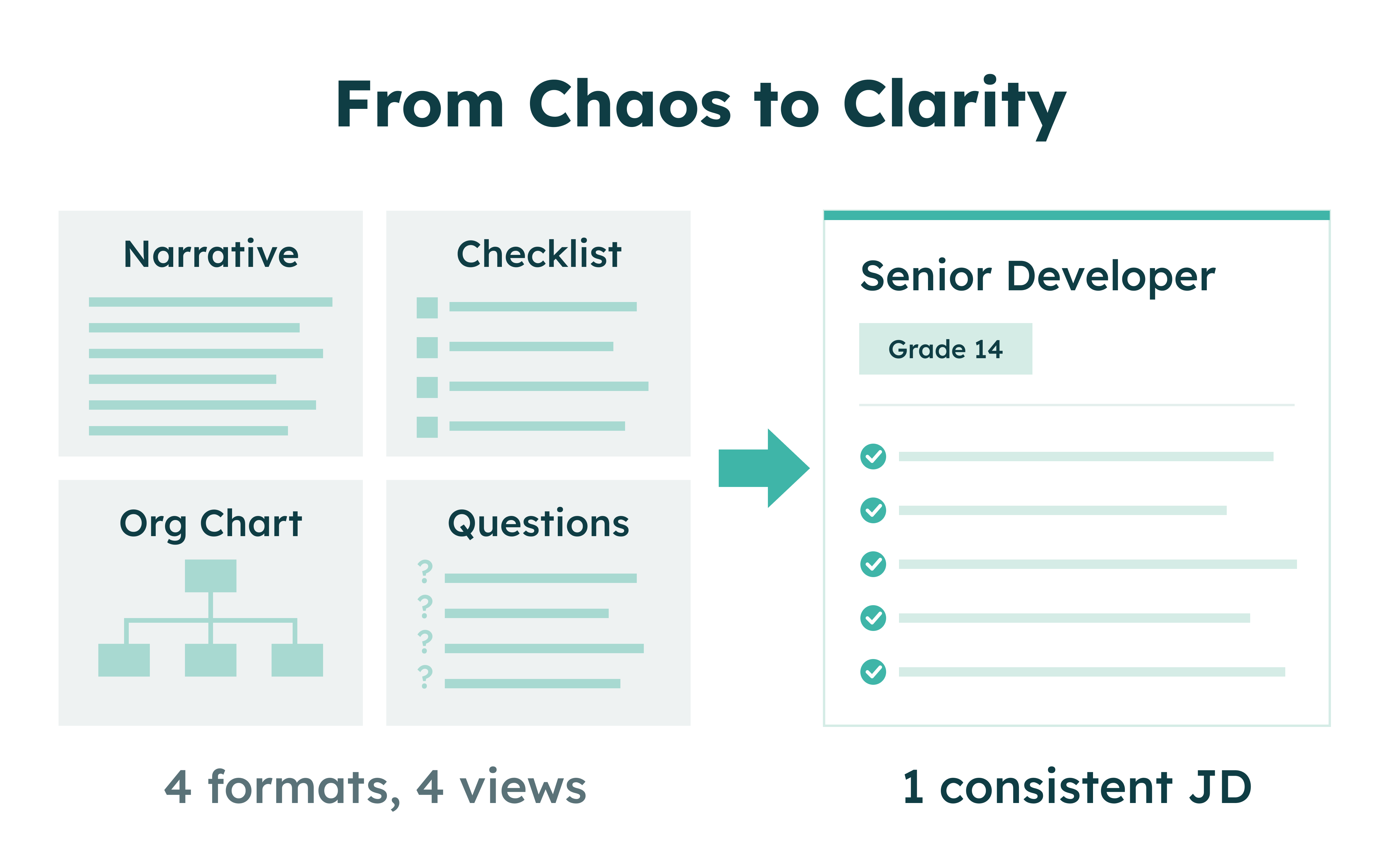
Many organizations end up with a confusing variety of job description formats - long narratives, checklists, org charts, questionnaires - each created for a different purpose. gradar brings job descriptions back to what they must enable -
a consistent view of roles across functions and levels
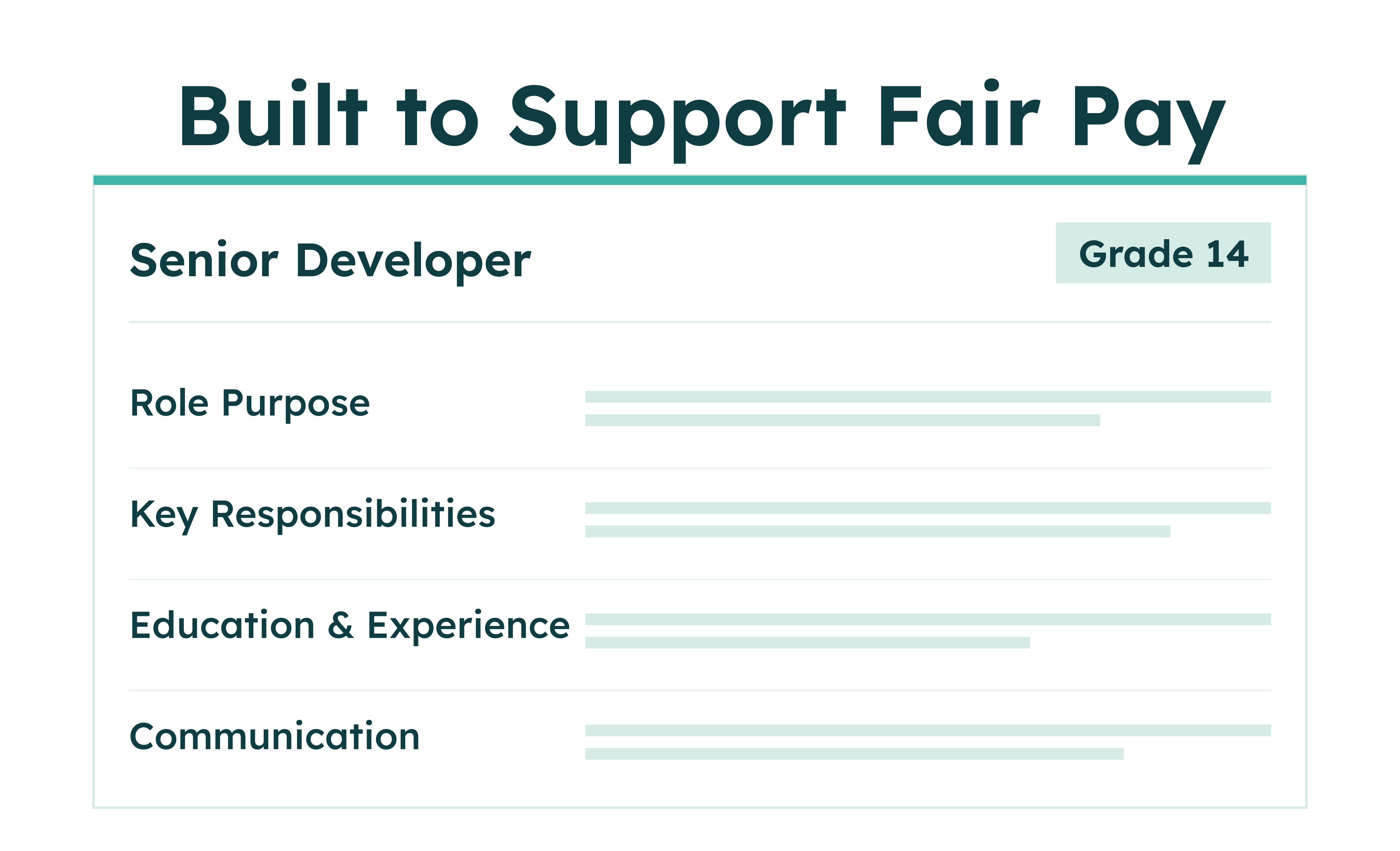
A job description is most useful when it’s specific enough to be real but standardized enough to compare. gradar generates job descriptions that clearly define role purpose, key responsibilities, education and experience and communication - ensuring roles are understood consistently across the organisation.

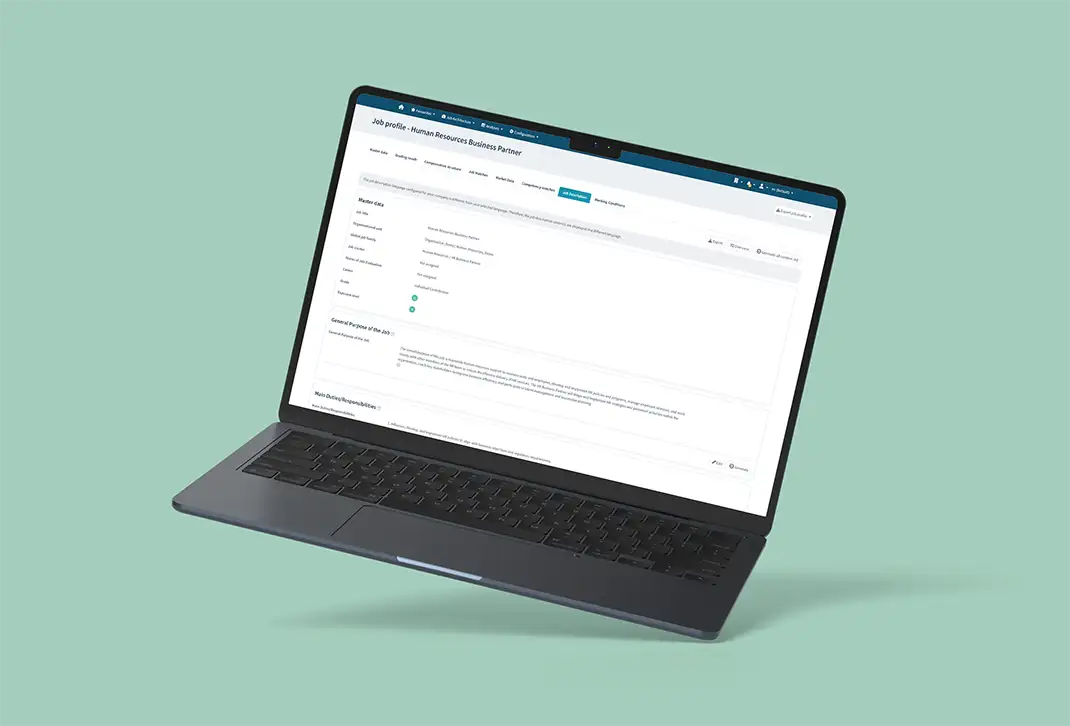
Use generative AI to automatically create professional, ready-to-use job descriptions written in natural language - saving time while maintaining consistency and quality. JDs are generated directly from evaluated job levels and factors - ensuring they reflect the true value of work and remain aligned with your job architecture.
Work changes – but your job architecture shouldn’t break every quarter. Employees naturally reshape their work over time - taking on new tasks, building new relationships and reframing what their work means. gradar job descriptions keep roles stable while work evolves to improve accuracy, engagement and satisfaction.

gradar generates job descriptions using the information already captured in your job evaluation and job architecture, such as job level, role scope and evaluated factors. AI then transforms this structured input into clear, professional text covering elements like the role purpose, key responsibilities, scope and expectations. Because the descriptions are built from evaluated job data, the output remains consistent across roles and aligned with your organisation’s job architecture.
In most cases, the core inputs are already available if you use gradar for job evaluation. These typically include your job architecture (job families, levels and level logic) and the evaluated roles with their factor outcomes and job levels. You can also add optional role-specific details, such as team context, tools used or the working environment, to ensure the generated job descriptions reflect the practical realities of the role.
Yes. Generated job descriptions can always be reviewed and edited before they are published or exported. Organisations can also standardise the structure and wording used in job descriptions, including the order of sections, terminology and tone of voice. This helps ensure job descriptions remain consistent and professional across the organisation rather than evolving into inconsistent documents written in different styles.
Because job descriptions in gradar are linked to evaluated job value, they can evolve together with the role. If the evaluation or role details change, the job description can be regenerated or updated to reflect those changes. This helps organisations avoid the common problem of outdated job descriptions stored in shared folders and ensures that role documentation stays aligned with the current job architecture.
Clear and consistent job descriptions play an important role in supporting pay transparency initiatives. They help organisations explain role scope and expectations in a comparable way, support consistent levelling decisions and document the rationale behind differences in responsibility, progression and pay. As a result, job descriptions can provide a stronger foundation for internal governance and for the communication and documentation often required in pay transparency programmes.
Job descriptions generated in gradar are designed to support clarity, consistency and transparency, but they are not legal advice and should not be considered a guarantee of legal compliance. In most organisations, job descriptions are reviewed internally—often by HR, legal teams or employee representatives such as works councils—before being formally adopted or published.
Yes. AI can generate job descriptions in the language selected by the user. If needed, the language can be changed during the generation process, allowing organisations to produce job descriptions suitable for different countries or regions.
Job descriptions can be exported as Word documents and then used within your HRIS, applicant tracking system or internal job catalogue. This makes it easy to integrate gradar-generated job descriptions into existing HR processes such as recruitment, role documentation and internal communication.
Define grades, career paths & job families for a fair, transparent organization.
Job titles, job families, career paths & competency profiles - the building blocks of a clear job architecture

gradar connects job evaluation, job architecture and job descriptions - creating clarity, consistency and confidence in pay.
Job evaluation
Compensation
Pay transparency